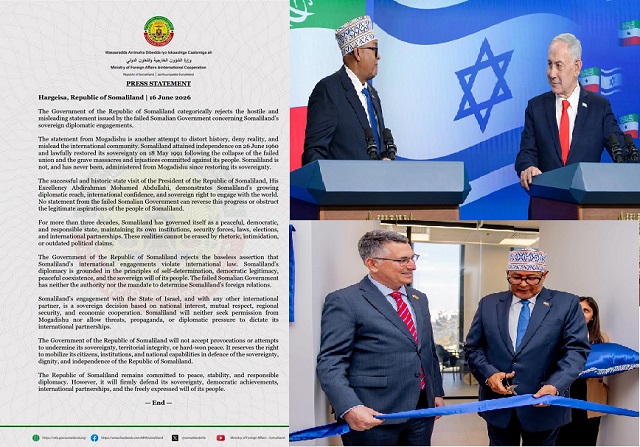

Washington (Hornpost) on the Horn of Africa, at the strategic point where the Gulf of Aden meets the Red Sea, lies an enthusiastic partner willing to host U.S. military bases and allow access to critical resources at a time of growing competition between the United States and China.
The only problem: the U.S., like every other country in the world, views Somaliland as part of Somalia.
“The United States recognizes the sovereignty and territorial integrity of the Federal Republic of Somalia, which includes the territory of Somaliland,” a U.S. State Department spokesperson told Newsweek.
“The State Department is not in active discussions with Somaliland’s representatives about a deal to recognize Somaliland as a state,” the spokesperson added.
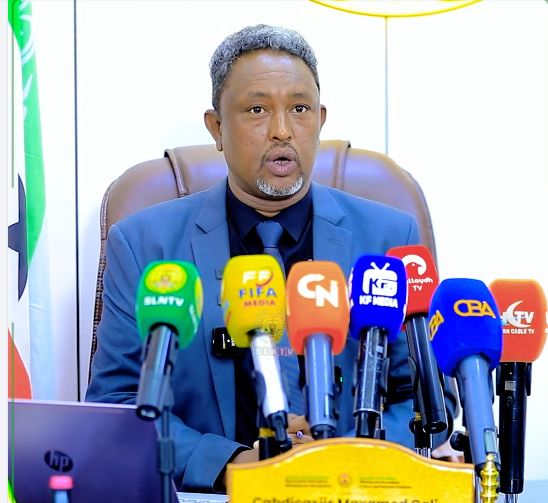
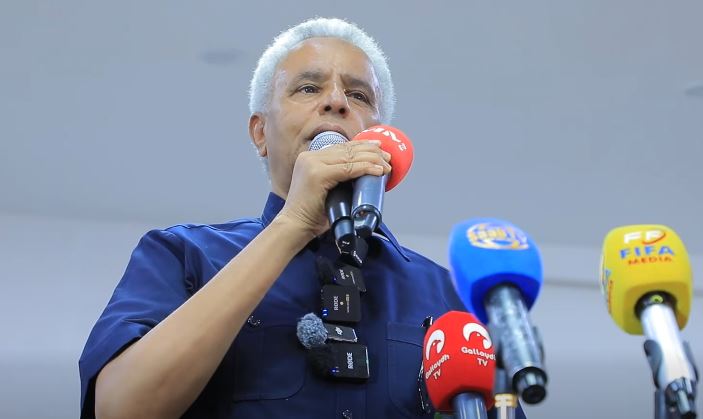
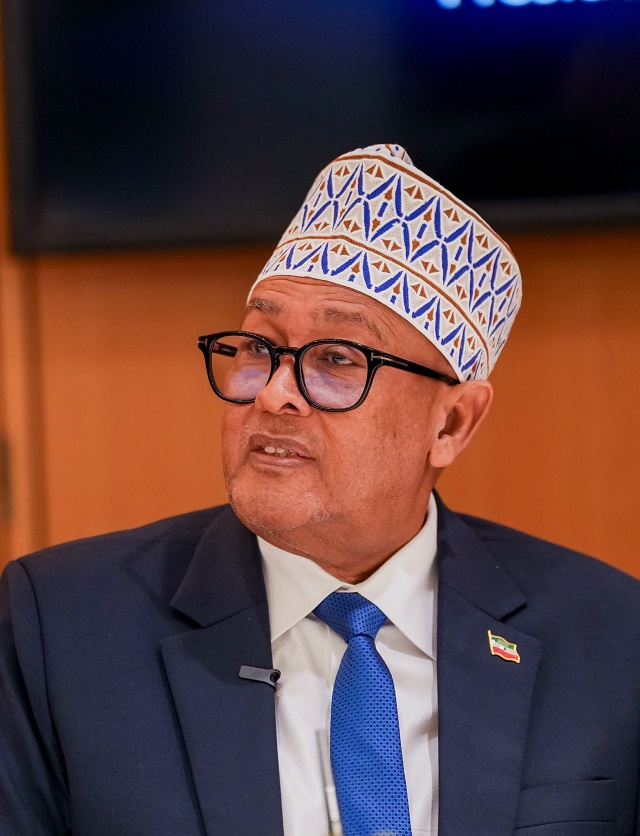
But such statements have yet to crush the hopes of advocates such as Bashir Goth, who serves as Somaliland’s representative to the U.S.
“While I cannot speculate on the deliberations within the United States government, there has been growing concern about the failure of the ‘One Somalia’ policy to produce a central government in Mogadishu that can stand on its own two feet, as well as interest among U.S. policymakers in exploring alternative approaches to the region,” Goth told Newsweek.
“Somaliland looks forward to continuing its constructive, pragmatic conversations with U.S. officials about the future of our bilateral relationship,” he added.
Historical Grievances:
As with many sovereignty disputes across the globe, the feud over Somaliland’s status is rooted in colonialism. The United Kingdom first established the protectorate of British Somaliland in the late 19th century, followed by Italy’s colonization to the south of Italian Somaliland in much of the rest of what is known today as the Federal State of Somalia.
Italian Somaliland was placed under British military administration after Italy’s World War II defeat in 1941, and in 1950 became a United Nations trust territory administered by Italy until independence in 1960. British Somaliland gained its independence that same year, but just days later voluntarily opted to join a unified, free Somali state in union with the former Italian Somaliland.
Frictions would arise, however, amplified with the 1969 coup in which military leader Siad Barre established communist rule, met by an insurgency backed by the Somali National Movement, which drew support from the Somaliland region. Upon the collapse of Barre’s government in 1991, Somaliland proclaimed independence, operating largely autonomously from the central government in Mogadishu, which remained in a state of civil war.
Another autonomous state, Puntland, would emerge as an autonomous state in 1998 next to Somaliland, though it does not seek outright independence from Somalia.
Today, Somaliland looks to portray itself as a bastion of democracy and stability at a time when other regions of Somalia are plagued by violence perpetrated by the likes of the Al-Qaeda-affiliated Al-Shabab movement and the Islamic State militant group’s Somalia branch.
“Somaliland has built a secure, stable, democratic society that provides opportunities for its citizens, is open to foreign investment, and seeks to advance peaceful relations with its neighbors,” Goth said.
He likens historical parallels of Somaliland’s position as part of a united Somalia with the formation and dissolution of other combined states, such as Czechoslovakia, the Senegambia Confederation, the Soviet Union and the United Arab Republic.
Challenging China:
Thus far, no U.S. administration has backed Somaliland’s statehood claims, though Washington does host a Somaliland liaison office. Meanwhile, Goth says several other countries, including Denmark, Djibouti, Ethiopia, Turkey, the United Arab Emirates and the United Kingdom maintain diplomatic office in the de facto capital of Hargeisa.
Ethiopia’s position has especially been in the spotlight since the large landlocked nation signed a memorandum of understanding with Somaliland early last year through which the former would consider altering its diplomatic stance in exchange for leasing a 12-mile stretch of coastline.
The move was condemned by Egypt, Eritrea and Somalia, raising regional tensions until a Turkey-brokered agreement in December appeared to curb Ethiopia’s coastal ambitions, though without any explicit renunciation of the deal. The anticipated deal had also drawn criticism from the 55-member African Union and 22-member Arab League, both of which Somalia is a member.
Given the controversy attached to the issue, the official U.S. position has been to the African Union to first deliberate the matter before any policy changes from Washington.
But Somaliland has ramped up efforts to make the case for a change. The campaign includes an appeal to the Trump administration’s search for international partners to compete with China across the globe, and particularly in Africa, where the People’s Republic has established unprecedented influence.
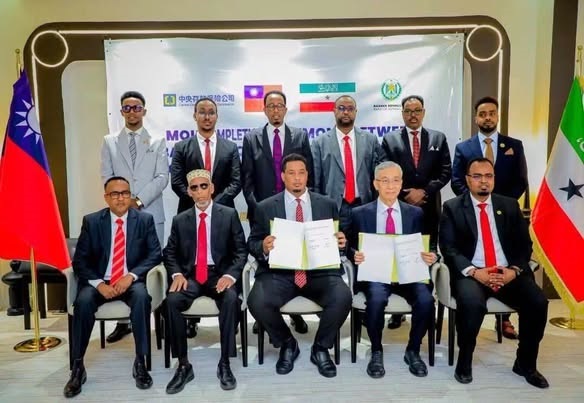
“Somaliland has resisted China’s attempts to expand its presence and influence in Africa and instead has pursued partnerships with the U.S. and Taiwan – formally recognizing the latter in 2020,” Goth said.
Only one internationally recognized African nation, Eswatini, maintains diplomatic ties with Taiwan, which is claimed by China and has lost much of its international recognition to Beijing since a 1949 civil war led to a communist victory on the mainland. Washington does not formally recognize Taipei, either, though it has maintained and expanded upon ties, including through military support.
Somalia’s announcement in April that it would no longer accept travel documents issued by Taiwan was welcomed by China, which lauded Somalia’s “commitment to the one-China principle” and outlined a similar position afforded to Mogadishu by Beijing.
“Somaliland is part of Somalia’s territory,” Chinese Foreign Ministry spokesperson Guo Jiakun told reporters at the time. “China firmly supports the Somali federal government’s effort to safeguard national unification, sovereignty and territorial integrity, and firmly opposes the Taiwan authorities and Somaliland hosting each other’s institution or having any form of official interaction.”
The realities of the U.S.-China competition have also sparked a race for key minerals. Here, too, Goth said Somaliland could prove beneficial.
“Somaliland has also recently discovered high-grade lithium and other critical mineral deposits, like copper and iron ore,” Goth said. “As the U.S. seeks to diversify its critical mineral supply chains away from China-dominated sources, Somaliland represents a potential partner with shared values.”
Newsweek has reached out to the Somali Ministry of Foreign Affairs for comment.
The View from Beijing:
Reached for comment, Chinese Embassy to the U.S. spokesperson Liu Pengyu reaffirmed to Newsweek Beijing’s position as voiced by Guo in April, stating “Somaliland is part of Somalia” and “China firmly supports the efforts of the Federal Government of Somalia to safeguard national unity, sovereignty, and territorial integrity.”
Liu also emphasized “that China has always advocated upholding the purposes and principles of the UN Charter and supports all countries in safeguarding their sovereignty and territorial integrity.”
As for the recent inroad between Hargeisa and Taipei, he asserted that “we firmly oppose the establishment of institutions by the Taiwan authorities or any form of official exchanges between the two countries.”
While the U.S. has enjoyed close ties with Somalia since the establishment of the transitional federal government in 2004 and the federal government in 2012, Beijing has also fostered close ties with Mogadishu.
Liu argued that engaging with Africa was not a zero-sum game, saying Beijing would encourage rather than oppose greater U.S. investment across the continent.
“Supporting Africa’s development is the shared responsibility of the international community,” Liu said. “We have always welcomed the diversification of Africa’s cooperation partners and welcome the international community, including the United States, to increase its attention and investment in Africa and engage in truly equal and mutually beneficial cooperation with African countries.”
“We also hope that the United States will approach China-Africa cooperation with an open mind,” he added. “Africa is not an arena for great power games. African countries and people have the wisdom and ability to choose partners that serve their own interests. As long as cooperation is truly beneficial to the African people, it can be self-sustaining and win-win.”
A ‘Model’ for Counterterrorism:
Beyond the China front, Goth argued that Somaliland “offers a secure, stable environment” for the U.S. “to counter terrorism throughout the region,” including resisting maritime attacks mounted by Yemen’s Ansar Allah, also known as the Houthi movement, in response to the war between Israel and the Palestinian Hamas movement in the Gaza Strip.
While such attack have subsided since the Trump administration reached a truce with the Iran-aligned group in May, Ansar Allah continues to conduct missile and drone strikes against Israel, raising uncertainties over safety through one of the world’s busiest maritime shipping routes.
Meanwhile, the U.S. has largely turned its attention in the region elsewhere, ramping up strikes targeting Al-Shabab and Islamic State Somalia Province, largely in coordination with Somali authorities.
Many such operations have been conducted by aircraft flying from naval assets in the region, with U.S. personnel present on the ground in Somalia. Also key to the U.S. military presence in the region is the U.S. base in Djibouti, which hosts military facilities owned by China and several other nations as well.
Goth said closer ties between the U.S. and Somaliland would also bolster the effort to route militant groups active in the Horn of Africa and beyond.
“Somaliland’s model for countering extremism and terrorism within its border provide a blueprint for the U.S. to consider in other regions,” Goth said, “while partnering with a democratic government will send an important message to others that building institutions is the best and most sustainable way to contribute to global security.”
Source: News week


This Aspiring Nation Wants to Be Trump’s New Weapon Against China in Africa
Hornpost Staff Reporter