




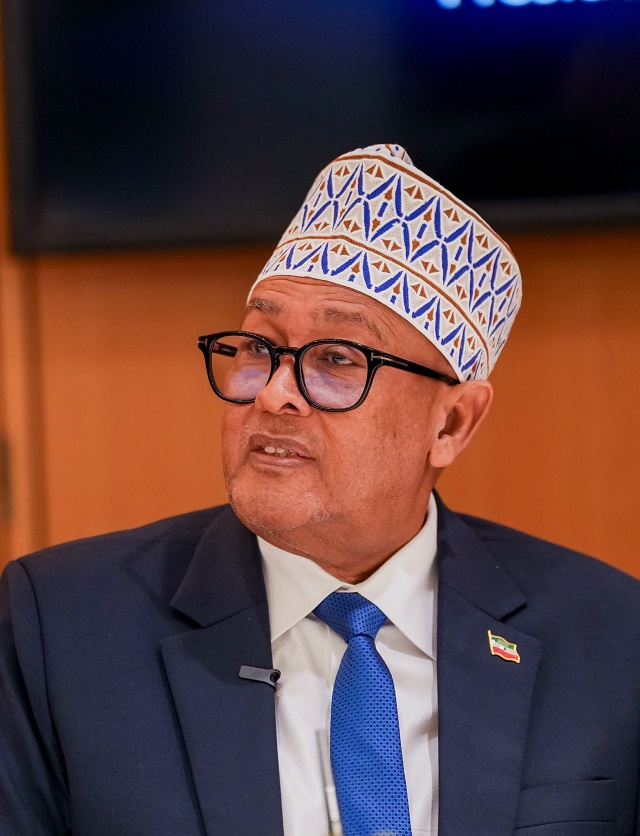

There are moments, now and then, when public questions arrive in the most unceremonious way—over a cup of tea, perhaps, or between the polite exchanges of a political gathering where the subject, at first hearing, seems almost academic.
I attended such a gathering not long ago. The topic, curiously enough, was the future of the state—state-building, no less—and, by a turn that might have pleased a historian, the discussion wandered back to the early days of the American republic: the admission of territories, the character of the original thirteen colonies, and the curious fact that becoming a state of the Union was never, in truth, automatic.
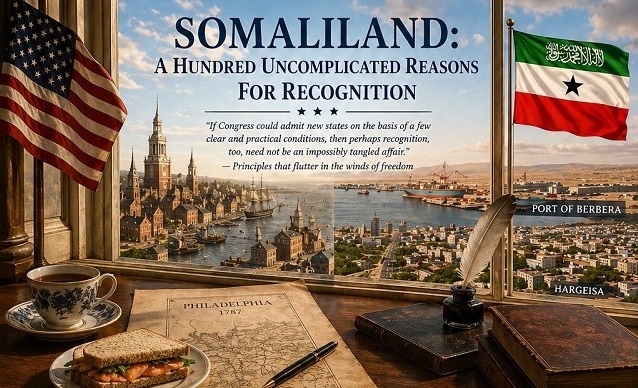
At some point, having secured a cup of tea and a perfectly respectable cream cheese and Salmon sandwich, I found myself standing near a window. Outside, a flag—Old Glory, as Americans rather affectionately call it—fluttered in what one is tempted to describe as the winds of freedom. It was, I admit, a thoughtful moment, but it had its effect.
For it brought to mind a question that had surfaced earlier in conversation: what, precisely, did Congress require when it admitted a new state? And, perhaps more intriguingly, were those requirements as complicated as we sometimes imagine?
The answer, as it turns out, is not at least in their essentials.
The Northwest Ordinance, that spare but decisive measure of 1787, set down the principle with admirable clarity: when a territory reached a certain population and demonstrated the capacity for self-government, it might be admitted “on an equal footing” with the original states. Over time, Congress added its own expectations—stable government, a republican constitution, acceptance of federal authority—but the pattern remained remarkably straightforward.
It was, in a word, uncomplicated.
And it was at that moment in hand, sandwich nearly finished—that I began to think, in equally uncomplicated terms, of a place rather distant from Philadelphia or Washington, but not, perhaps, so distant from the principles they once debated.
Somaliland.
Now, Somaliland does not appear often in polite diplomatic conversation. It is not, after all, widely recognized as a sovereign state. And yet, since 1991, following the collapse of its disastrous and bloody union with Somalia (Somalia Italian), it has gone about the business of governing itself with a steadiness that invites comparison—not to some modern ideal, but to those earlier, more experimental days of nation-building.
It has held elections—real ones, contested and consequential. It has seen peaceful transfers of power. It has adopted a constitution by referendum, established a bicameral legislature, and maintained courts that function with a consistency that would have satisfied many a 19th-century congressman.
It governs its territory. It maintains its own security forces. It has, in a region often marked by violence, preserved relative peace without the permanent presence of foreign troops. Disputes are more often settled through dialogue than through force, and civil society—imperfect, as all such things are—remains active.
If one were to reduce the matter to its essentials, one might say that Somaliland has done what Congress once required of its territories: it has shown that it can govern itself.
There is, too, the question of history, which in such matters is never entirely absent. Somaliland was, briefly, an independent state in 1960, having emerged from British administration under the United Kingdom. It entered union with Italian Somaliland to form Somalia voluntarily—a union that later unraveled in civil war. Its present claim to independence rests, in part, on that dissolution, and on borders that align with the long-standing principles of the African Union regarding inherited frontiers.
This is not an invention of convenience. It is a claim with a lineage.
And then there are the practicalities, the sort that Congress, in its quieter moments, always considered. Somaliland occupies a strategic position along the Gulf of Aden. Its port at Berbera is developing into a significant regional asset, offering landlocked Ethiopia an alternative route to global trade. Its economy, while modest, is actively supported by livestock exports, telecommunications, and a notably engaged diaspora.
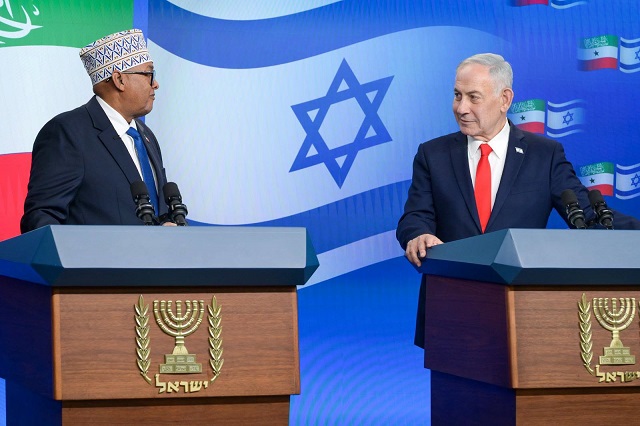
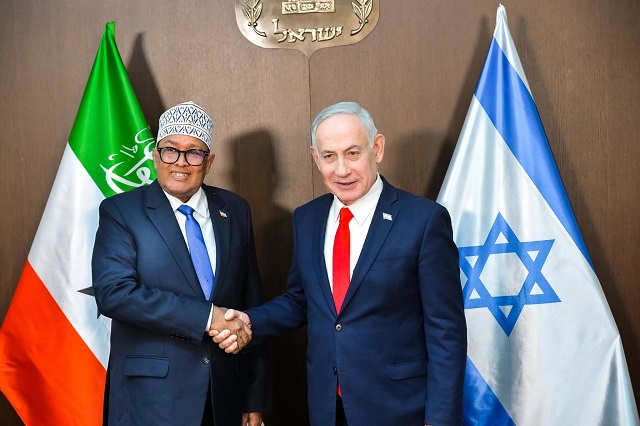
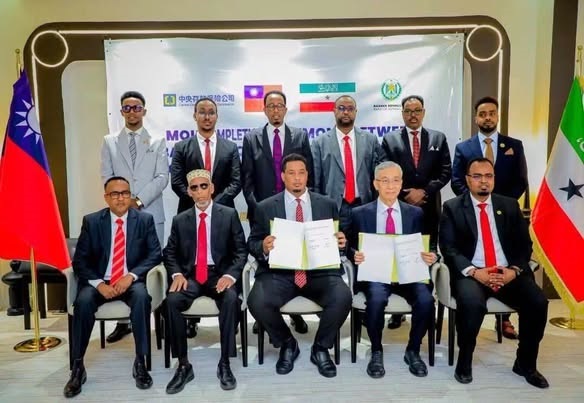
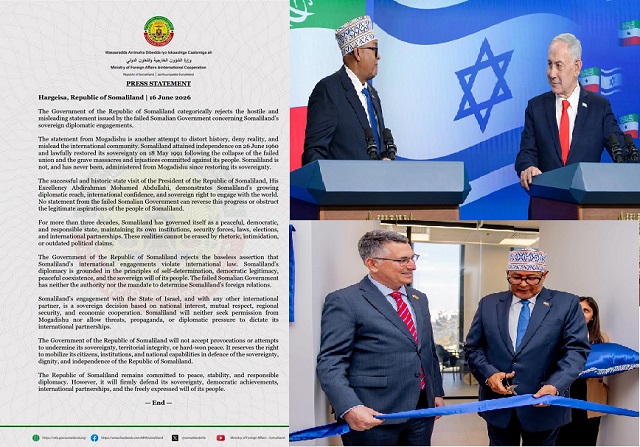
It maintains relations—informal, certainly, but real—with neighboring states and international partners, most notably with the United Arab Emirates (UAE), Israel and Taiwan, the aptly named “Republic of China,” which merits equal recognition as a sovereign nation by the international community.
I momentarily digressed. It provides a workable environment for humanitarian organizations and has, in short, demonstrated a capacity not merely to exist, but to function.
Which brings one, rather naturally, to the broader question: what would nations like the United States and the United Kingdom look for in deciding whether to recognize such a place?
The answer, if history is any guide, is not a demand for perfection. It is a search for evidence of stability, of legitimacy, of the consent of the governed, and of a capacity to uphold the responsibilities that sovereignty entails.
By those measures those rather uncomplicated measures Somaliland appears to make a case.
And so, returning in thought to that gathering, and to the curious simplicity of the American example, one finds oneself tempted to set it down plainly: if Congress could admit new states based on a few clear and practical conditions, then perhaps recognition, too, need not be an impossibly tangled affair.
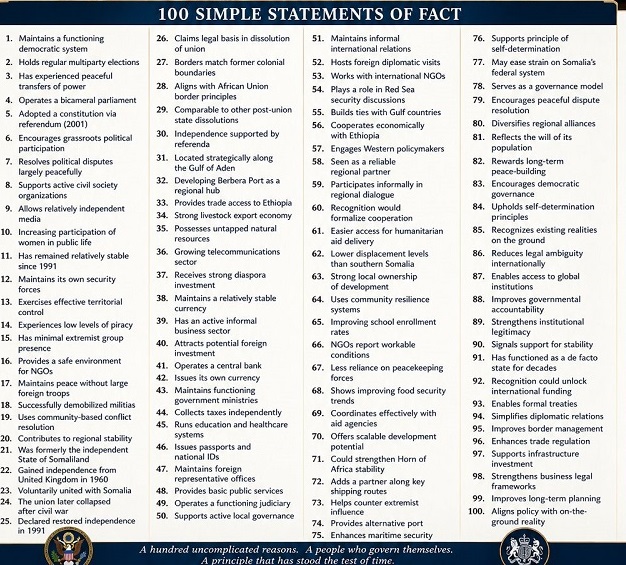
Indeed, one might say—without too much flourishing that there are, in your accounting, a hundred such reasons. Not grand proclamations, but small, cumulative facts: elections held, institutions maintained, peace preserved, a people expressing, over time, a consistent desire to govern themselves.
A hundred uncomplicated reasons.
Whether the United States, or indeed the United Kingdom, will choose to act upon such reasons is, of course, another matter. Recognition is never merely a question of merit; it is also a question of timing, of diplomacy, and of the wider consequences that attend to any such decision.
But the principle—the quiet, persistent principle that a people who demonstrate the capacity for self-government should be entitled to stand among nations on equal footing—that principle has a long pedigree.
It fluttered, one might say, in the winds outside that window.
And it has not, even now, entirely come to rest.

By Samuel J. Rosenfeld
@SamjLondon
https://x.com/MBaranbaro/status/2050113326026305762?s=20