


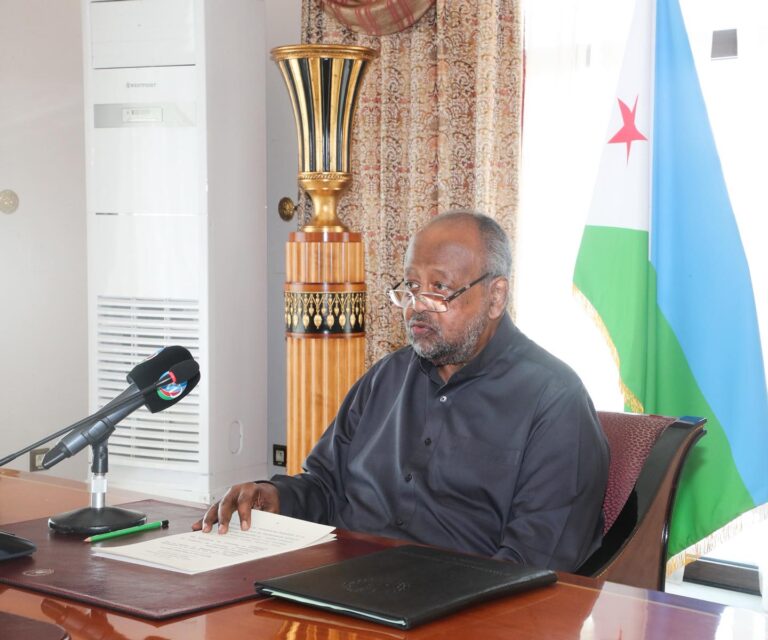
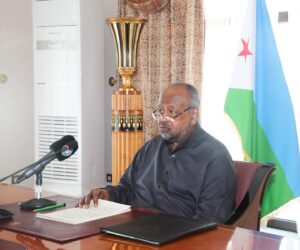
DJIBOUTI CITY (Horn post) President Ismail Omar Guelleh has announced a comprehensive strategy aimed at protecting household purchasing power and maintaining price stability amid rising global uncertainties linked to the ongoing conflict in the Middle East.
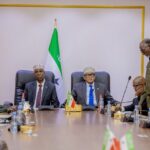
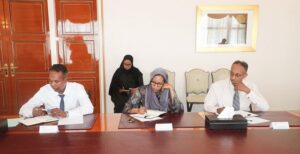
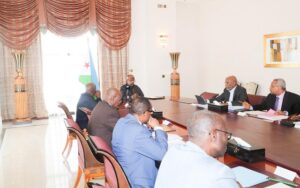
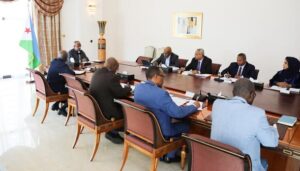
The plan was unveiled during a high-level meeting held at the Palace of the Republic on Wednesday, bringing together senior government officials and key economic regulators. The discussions focused on assessing the early economic impact of the conflict—particularly on essential commodities and energy prices—and outlining a coordinated national response.
Nearly three weeks after the escalation of hostilities in the region, officials reviewed initial signs of inflationary pressure affecting tariffs on critical goods. The meeting also evaluated the resilience of Djibouti’s economy in navigating external shocks, with authorities highlighting the country’s ongoing efforts in crisis prevention and economic management.
Four-Pillar Strategy
President Guelleh presented a proactive, four-pillar plan designed to mitigate price volatility and safeguard consumers:
- Strengthening Market Transparency and Oversight
The government will intensify monitoring of market conditions to distinguish between genuine supply-driven price increases and speculative practices. Authorities have been instructed to enhance data collection and public reporting to ensure accountability and enable timely intervention.
- Protecting Vulnerable Households
Measures under this pillar include stabilizing or capping prices of selected essential goods, reinforcing targeted subsidies, and expanding social protection programs and food assistance to support low-income families.
- Engaging the Private Sector
The plan calls for closer coordination with businesses to ensure adequate supply and availability of essential products. The private sector is expected to play a central role in maintaining market stability through compliance and collaboration.
- Reducing External Dependence
In the longer term, the government aims to diversify supply sources, modernize logistics systems, and promote domestic production to reduce vulnerability to external disruptions.
The meeting was attended by Prime Minister Abdoulkader Kamil Mohamed, along with several cabinet members, including Minister of Trade and Tourism Mohamed Warsama Dirieh, Minister of Energy and Natural Resources Yonis Ali Guedi, and Minister of Social Affairs and Solidarity Ouloufa Ismail Abdo.
The initiative underscores Djibouti’s efforts to cushion its economy and citizens from global market disruptions, while reinforcing long-term economic resilience.
Pictures:
Prepared by:
Horn post staff