By Hornpost Analysis Desk
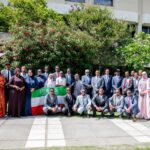
Hargeisa (Hornpost) Somalia’s decision to submit its accession documents to the International Mobile Satellite Organization (IMSO) during the 34th IMO Assembly in London is more than a routine diplomatic gesture. It signals a calculated effort by Mogadishu to consolidate its position within the global maritime governance system — a move that inevitably raises questions about implications for Somaliland, whose de facto autonomy extends strongly into the maritime domain.
A Strategic Step by Mogadishu:
By joining IMSO, Somalia strengthens its claim as the internationally recognized administrator of maritime affairs in the Horn of Africa.
The IMSO framework governs satellite-based communication and safety systems used by ships worldwide. It does not grant direct political authority over territorial waters, but it does establish the Federal Government as the formal point of contact for maritime safety, reporting standards, and technical compliance.
In short: Somalia is aligning itself with global maritime protocols that bolster its institutional legitimacy.
Why It Matters for Somaliland:
Somaliland already manages its own coastline, ports, and maritime security. Berbera Port functions under Somaliland’s independent regulatory and operational framework. Yet, in the eyes of the international system, IMSO and IMO only deal with recognized states — and that means Mogadishu speaks on behalf of the entire Somali coastline, including Somaliland’s shores.
This dynamic does not strip Hargeisa of its practical control, but it creates a widening representation gap between Somaliland’s on-the-ground authority and the federal government’s international mandate.
Technical Consequences, Not Immediate Operational Change:
Crucially, joining IMSO does not transfer control of ports, coastguard operations, or shipping movements. Somaliland’s day-to-day management of Berbera remains unchanged.
However, certain areas may feel indirect effects:
International maritime audits and safety standards may be routed through Mogadishu.
Capacity-building programs funded by global agencies could prioritize federal institutions.
Data related to maritime incidents, piracy reporting, or vessel tracking may be expected to flow via federal channels.
These shifts are bureaucratic rather than operational, but they highlight the structural challenges Somaliland faces when global maritime bodies interact only with recognized states.
Politics Behind Technicalities:
Somalia’s diplomatic activity comes at a moment when maritime governance is tightly linked to sovereignty narratives. For Mogadishu, participation in treaties like IMSO reinforces its image as a re-emerging state capable of managing international obligations.
For Somaliland, it underscores the limitations of operating outside the recognition framework — particularly in highly regulated global sectors like shipping and maritime safety.
Looking Ahead:
The latest move is unlikely to alter reality in Somaliland’s waters tomorrow. Yet, as Somalia continues to build its portfolio within organizations like the IMO, IMSO, and regional maritime bodies, the symbolic advantage grows.
For Somaliland, the implication is clear:
To protect its maritime interests, it must deepen technical partnerships, strengthen port governance, and ensure that its de facto structures remain indispensable to regional maritime stability.
Prepared:
Hornpost staff Reporter
info@hornpost.com
www.hornpost.com