Opposition says President Hassan Sheikh Mohamud’s constitutional term ended May 15 as mediation efforts fail and Türkiye rejects claims of political interference.
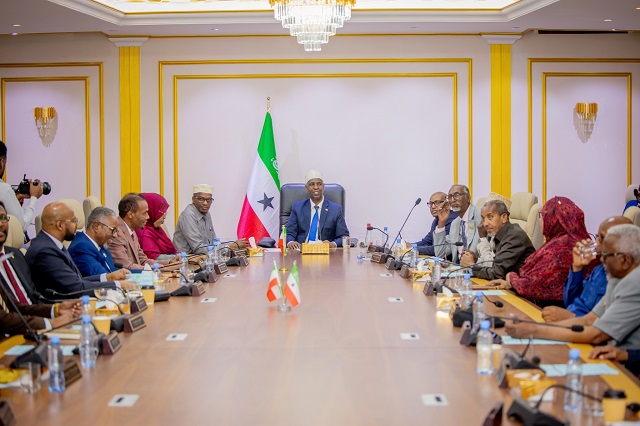
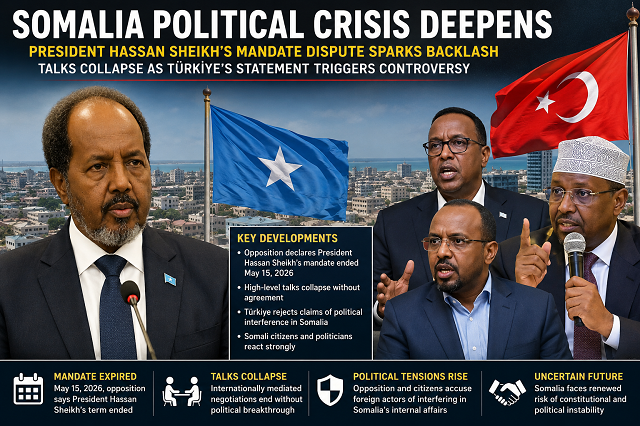
MOGADISHU, Somalia — Somalia has entered a fresh political crisis after opposition leaders declared that President Hassan Sheikh Mohamud’s constitutional mandate expired on May 15, 2026, while high-stakes negotiations aimed at resolving the dispute collapsed without an agreement.
The political talks, held under international mediation and involving opposition leaders, federal officials and regional stakeholders, ended without a breakthrough, deepening concerns over a potential constitutional vacuum in the Horn of Africa nation. Reports indicate diplomats from the United States, United Kingdom and other international partners had encouraged both sides to reach a compromise on the electoral roadmap.
Opposition groups maintain that Hassan Sheikh’s four-year constitutional term officially expired on May 15 and argue that any attempt to remain in office beyond that date lacks legal legitimacy. Government allies, however, have defended constitutional amendments and an extended political roadmap that could keep the administration in office until new elections are organized.
Political tensions intensified after a statement from the Turkish government sparked widespread reaction among Somali citizens and political figures, with some opposition leaders accusing Ankara of becoming involved in Somalia’s internal political affairs.
Türkiye’s Center for Combating Disinformation issued a statement on May 13 rejecting allegations that Ankara was using its military presence in Somalia to pressure opposition groups or support a specific political actor.
“The claims that Türkiye is interfering in Somalia’s internal political processes and using its military forces to pressure the Somali opposition or support a specific political actor are entirely unfounded,” the Turkish statement said.
The statement added that Turkish military personnel operating in Somalia “have absolutely no involvement in Somalia’s electoral processes or internal political dynamics,” stressing that Ankara’s presence is focused on security cooperation, institutional development and counterterrorism support.
The Turkish statement triggered strong reactions across Somali political circles and on social media, where critics questioned the timing of Ankara’s intervention amid the escalating mandate dispute.
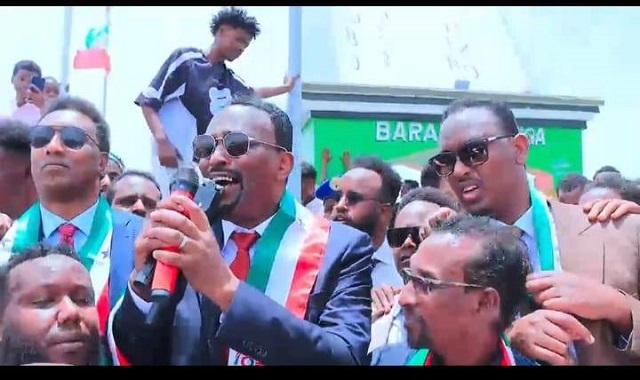
Somalian opposition figure Abdirahman Abdishakur Warsame was among those criticizing Türkiye’s position, accusing foreign actors of interfering in Somalia’s internal political affairs, according to regional media reports.
Hours after the collapse of political negotiations, Hassan Sheikh met with Turkish Ambassador Alper Aktas at Villa Somalia, a move that further fueled debate among opposition groups who viewed the meeting as a sign of international backing during the political standoff.
Somalia now faces mounting uncertainty as opposition factions, former presidents and federal member states continue to demand an inclusive electoral agreement, warning that failure to reach consensus could trigger a broader constitutional and security crisis like previous election disputes.
Analysts note that the current standoff comes at a particularly sensitive moment as Somalia balances internal political reform, security operations against Al-Shabaab and expanding strategic partnerships with regional and international allies.
Background and context
Türkiye has become one of Somalia’s closest strategic partners over the past decade, investing in infrastructure, defense cooperation, humanitarian projects and energy agreements. Ankara maintains military training facilities in Mogadishu and has recently expanded economic and security ties with the Somali federal government.
The latest dispute echoes Somalia’s 2021 electoral crisis, when disagreements over term extensions triggered armed tensions in Mogadishu and international diplomatic pressure for a negotiated settlement.
With negotiations now stalled and political positions hardening, attention is turning to whether fresh mediation efforts can prevent a deeper institutional crisis.
Prepared by:
Horn post staff
News Desk
info@hornpost.com
www.hornpost.com