
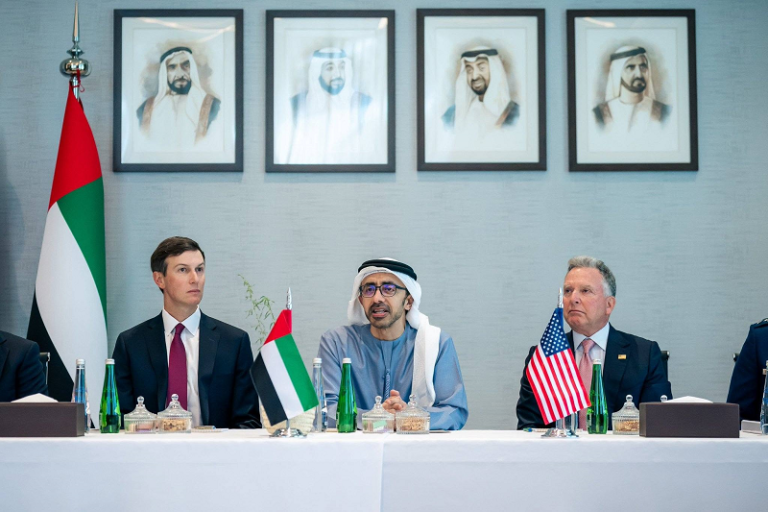
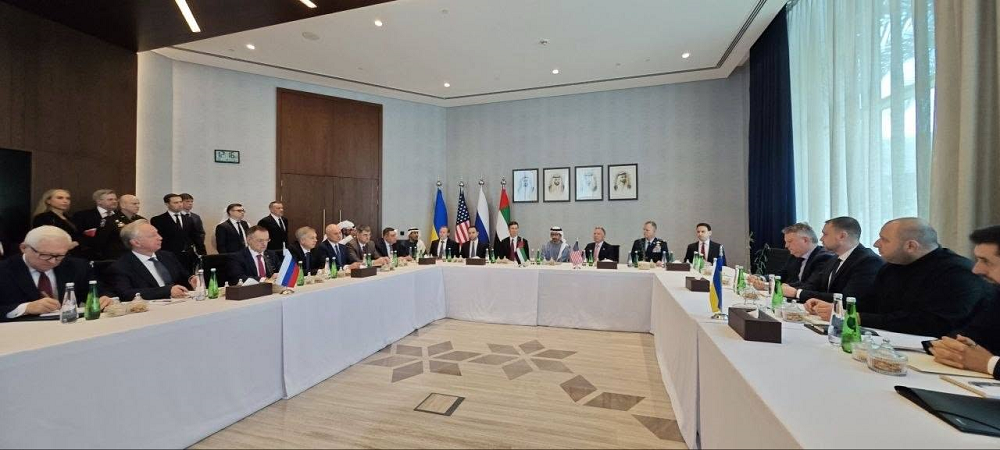
ABU DHABI, United Arab Emirates (HornPost) – The United States, Russia and Ukraine began high-level, U.S.-mediated peace negotiations in Abu Dhabi on Tuesday, November 10, as Washington stepped up diplomatic efforts to end the war and address wider security concerns involving Europe and NATO.
The two-day trilateral talks, hosted by the United Arab Emirates, mark the first meeting of this format since February and come after months of limited diplomatic progress in efforts to end Russia’s nearly five-year war against Ukraine.
The discussions are being led by U.S. President Donald Trump’s special envoy Steve Witkoff and his son-in-law Jared Kushner. Ukraine’s delegation is led by Rustem Umerov, head of the country’s Foreign Intelligence Service, alongside senior officials including presidential chief of staff Kyrylo Budanov. Russia is represented by a delegation headed by Vladimir Medinsky, an aide to President Vladimir Putin.
According to reports, the first round of discussions lasted nearly four hours, with humanitarian issues, security guarantees and possible steps toward ending hostilities among the key subjects.
U.S. officials described the discussions as productive, while Ukrainian President Volodymyr Zelenskyy characterized the engagement as constructive and substantive. However, no major breakthrough or comprehensive agreement was announced following the first day.
Europe and NATO Hold Separate Consultations
The negotiations have also drawn significant attention from European governments and NATO, amid concerns that any agreement between Washington and Moscow could have far-reaching implications for European security.
Ahead of the trilateral discussions with Russia, representatives from the European Union, France, Germany, Italy, the United Kingdom, Ukraine, the United States and NATO held a separate meeting in Abu Dhabi to coordinate their positions on ending the war and establishing a durable postwar security framework.
In a joint statement, the European participants emphasized that any future settlement must respect Ukraine’s sovereignty, territorial integrity and independent decision-making, while providing credible security guarantees.
They also reaffirmed that NATO would remain central to Euro-Atlantic collective defense and called for continued cooperation between European partners, Ukraine and the United States throughout the negotiating process.
The European consultations reflect growing concern among Western governments about their role in shaping the region’s future security arrangements, particularly as Washington explores broader discussions with Moscow.
Security Guarantees and Territorial Disputes Remain Key Obstacles
Despite renewed diplomatic engagement, Russia and Ukraine remain divided over several fundamental issues.
Moscow has maintained demands involving Ukrainian territory, restrictions on Ukraine’s military capabilities and its opposition to Ukrainian membership in NATO. Russia has also repeatedly called for changes to NATO’s military presence in Eastern Europe.
Kyiv, meanwhile, has rejected territorial concessions and restrictions on its ability to defend itself. Ukrainian officials have stressed that any peace settlement must include reliable long-term security guarantees to prevent another Russian invasion.
The future of Ukraine’s relationship with NATO and the broader European security architecture is therefore expected to remain a central issue in the negotiations.
U.S. Secretary of State Marco Rubio has indicated that any security guarantees for Ukraine would need to be acceptable to Russia to ensure that a future agreement can be sustained.
European officials, however, have stressed that decisions affecting the continent’s security must involve European partners and respect the sovereignty of individual countries.
UAE Seeks to Facilitate Diplomatic Breakthrough
The United Arab Emirates is hosting the negotiations as part of its efforts to support international diplomacy and encourage a political resolution to the conflict.
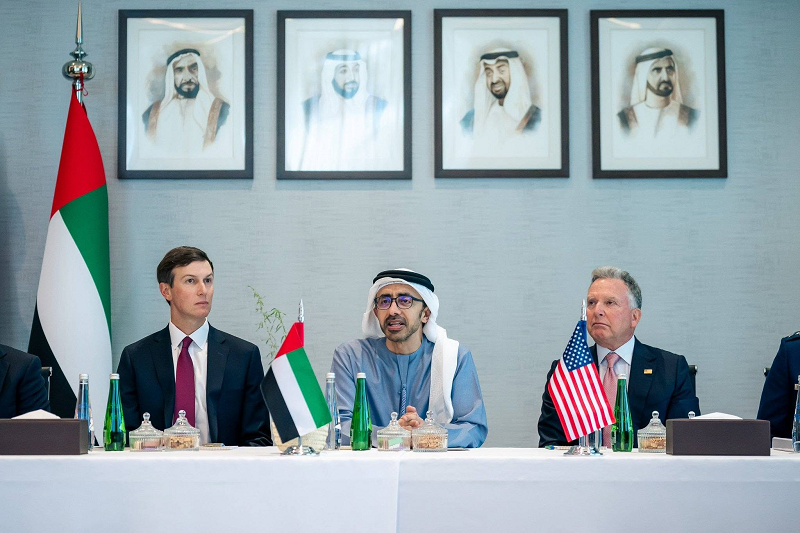
UAE Deputy Prime Minister and Foreign Minister Sheikh Abdullah bin Zayed Al Nahyan attended the launch of the third round of trilateral talks in Abu Dhabi, reaffirming his country’s commitment to facilitating dialogue between the parties.
The UAE said its hosting role reflects its support for diplomatic efforts aimed at bridging differences and advancing a political settlement to a conflict that has caused extensive humanitarian suffering.
The first day of negotiations ended without a publicly announced breakthrough, but discussions were expected to continue on Wednesday, November 11.
The outcome of the Abu Dhabi meetings could have significant implications not only for the future of Ukraine but also for relations between Washington, Moscow and European capitals, as well as the wider security balance across the continent.
HornPost Staff Reporter
Email: info@hornpost.com
Website: https://hornpost.com