Simultaneous assaults hit Bamako, Gao, Kidal and other cities as militants target military and government sites amid worsening Sahel insecurity.
LAGOS, Nigeria (Horn post) Mali is grappling with a major security crisis after coordinated attacks by armed groups, including Islamist militants, struck multiple cities across the country in one of the most significant offensives in recent years.
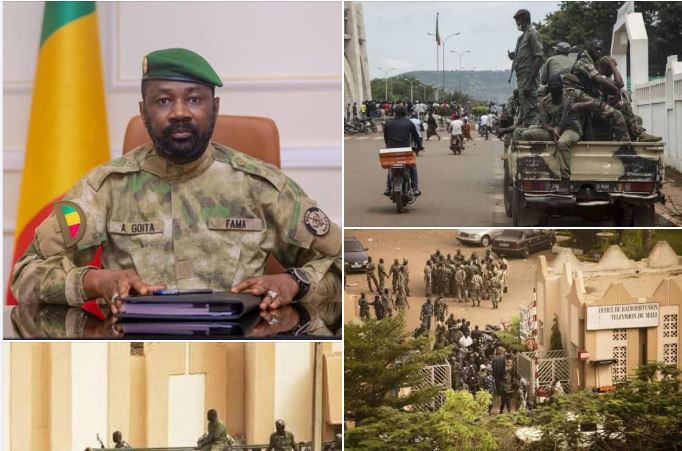
Heavy gunfire and explosions were reported near government buildings and key military installations, including in the capital Bamako, signaling a highly organized and simultaneous assault.
In Bamako, sustained clashes erupted near the main airport, forcing the suspension of both incoming and outgoing flights. Similar attacks were reported in Sevare, Kidal, and Gao, where residents also heard heavy gunfire and explosions around security positions.
The U.S. Embassy in Mali issued a security alert urging American citizens to shelter in place and avoid all movement as fighting intensified.
The Malian government said its forces were actively engaged in repelling the attackers and insisted the situation remained under control, though clashes were ongoing in several locations. Reports also indicate that Russia-backed Africa Corps personnel are supporting Malian forces in multiple operational zones, including Bamako.
Unverified videos circulating on social media appear to show militants linked to Jama’at Nusrat al-Islam wal-Muslimin (JNIM)—an Al-Qaeda-affiliated group—alongside Tuareg separatist fighters from the Azawad Liberation Front (FLA).
FLA spokesperson Mohamed Elmaouloud Ramadane claimed the group had taken control of several positions and warned neighboring Sahel states against intervention.
Mali has faced worsening instability in recent years, driven by overlapping insurgencies involving Al-Qaeda-linked JNIM, Islamic State-affiliated factions, and a long-running Tuareg separatist movement in the north.
The country has also undergone major political shifts since August 2020, when military officers led by Gen. Assimi Goïta seized power in a coup and later established a junta promising to restore security.
Subsequently, Mali severed ties with France, expelled the UN peacekeeping mission MINUSMA, and completed the withdrawal of international forces in 2023 after a decade-long deployment.
In their place, the junta has relied on Russian-backed mercenaries formerly linked to the Wagner Group, now operating under the Africa Corps, who have been accused by UN experts of contributing to widespread abuses and a “climate of fear and impunity.”
Despite these measures, insecurity has escalated further, including a fuel blockade last year that severely disrupted life in the capital.
According to the latest Global Terrorism Index, the Sahel region remains the world’s epicenter of terrorist activity, accounting for more than half of global terrorism-related deaths in 2025.
Mali, along with Burkina Faso and Niger, remains part of a junta-led regional bloc that has distanced itself from the Economic Community of West African States (ECOWAS) while continuing to struggle with entrenched jihadist insurgencies.
Prepared by:
Horn post staff
info@hornpost.com
www.hornpost.com