Washington – Horn of Africa – US Foreign Policy.
Washington (Horn post) Recent political and policy signals from Washington suggest that the United States may be gradually reassessing its approach toward Somalia’s Federal Government, which it formally recognized in 2013 following the end of the transitional period. While no official policy reversal has been announced, developments within US political circles have fueled speculation about a potential strategic shift.
At the center of this discussion is the apparent influence of “Project 2025,” a conservative foreign and domestic policy blueprint reportedly supported by figures close to former US President Donald Trump. The document, which spans nearly 900 pages and drew significant attention ahead of the 2024 US elections, advocates for a restructuring of American global engagements, particularly in strategically sensitive regions.
Strategic Rethinking in the Horn of Africa:
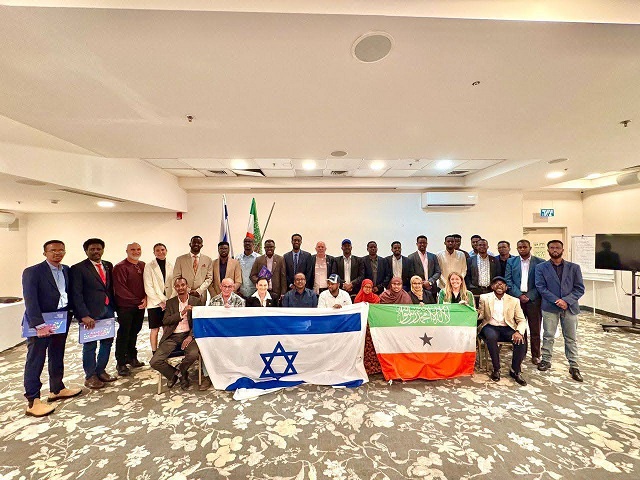
According to analysts monitoring US policy debates, Project 2025 recommends that Washington reduce its reliance on Camp Lemonnier in Djibouti, while exploring alternative strategic partnerships in the Horn of Africa. One of the proposals frequently cited in policy discussions is the potential recognition of Somaliland, framed as a counterweight to what US conservatives describe as China’s expanding geopolitical influence in Africa.
Although these ideas remain proposals rather than formal policy, they align with a broader debate in Washington over cost, strategic value, and long-term returns of US engagement in fragile states.
Visa Restrictions and Diplomatic Signals:
Further speculation has emerged following reports that the US Department of Homeland Security (DHS) declined to issue a travel visa for Somalia’s President, Hassan Sheikh Mohamud, for a planned visit to the United States. The reported decision has been linked to a broader executive travel restriction order, attributed to the Trump administration, affecting citizens of up to 75 countries, including Somalia.
US authorities have not publicly confirmed whether the decision was political or procedural, but observers interpret it as an unusual diplomatic signal, given Somalia’s status as a long-standing US security partner.
Suspension of US Aid to Somalia:
Adding to the uncertainty, the United States reportedly suspended all aid to Somalia earlier this month, following allegations of large-scale looting of World Food Program (WFP) grain stocks in Mogadishu.
The US Embassy publicly expressed concern over the incident, describing it as a serious breach of accountability.
Somali officials have denied direct presidential involvement, but the episode has intensified scrutiny in Washington over governance, aid diversion, and corruption risks in Somalia.
Implications for US–Somalia Relations:
Taking together, these developments point to a possible recalibration rather than an abrupt policy reversal. Analysts caution that US recognition of Somalia remains legally and diplomatically intact but emphasize that political trust and strategic patience appear to be under strain.
As US foreign policy debates evolve—particularly under conservative frameworks emphasizing transactional diplomacy—the Horn of Africa may once again become a focal point of geopolitical realignment, with Somalia and Somaliland both positioned at the center of competing strategic visions.
Horn post staff reporter
info@hornpost.com
www.hornpost.com
 Hornpost