
Luanda (Hornpost) — Djibouti’s President Ismail Omar Guelleh on Monday called for a renewed and more coordinated partnership between Africa and Europe, warning that fast-shifting global dynamics demand “a specific framework of action, cooperation and coordination” between the two continents.
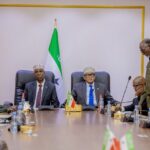
Speaking at the 7th African Union–European Union Summit in Luanda, President Guelleh emphasized the need to operationalize the Common Vision 2030, the joint roadmap adopted during the previous UA-EU Summit in Brussels in 2022. He described the framework as a “strategic, modern and results-oriented partnership charter” capable of guiding both continents through an era marked by geopolitical fragmentation and multiplying crises.
Guelleh said the Common Vision 2030 should serve as a reliable benchmark that positions Africa and Europe as “defenders of renewed, inclusive and effective multilateralism.”
Red Sea Security Tops Summit Concerns:
The Djiboutian leader placed Red Sea security at the top of urgent priorities requiring joint action. Calling the waterway a “vital artery of international trade and a strategic bridge between Europe, Asia and Africa,” he warned that shipping lanes have come under increasing threat since 2023.
He cited armed attacks on vessels, persistent regional tensions, and a resurgence of piracy in the Gulf of Aden, all of which have disrupted global supply chains, driven up maritime transport costs, and strained economies on both continents.
Guelleh urged stronger coordination between the AU and EU on maritime security, calling for the extension of Operation EUNAVFOR ASPIDES’ mandate to 2026 and supporting deeper cooperation with Operation Atalanta.
“Stabilizing the Red Sea will require a collective, structured and inclusive approach,” he said, urging the integration of ASPIDES into a broader regional security architecture aligned with Common Vision 2030.
Focus on the Horn of Africa’s Crises:
President Guelleh also highlighted ongoing instability in the Horn of Africa, including the war in Sudan, South Sudan’s fragile transition, rising migration pressures — with nearly 300,000 migrants currently in Djibouti — and renewed maritime insecurity.
He said addressing these challenges depends on stronger EU cooperation with IGAD, which he described as the region’s most credible platform for mediation, early-warning mechanisms, border security and regional integration.
Guelleh urged European partners to uphold the commitments made during the Djibouti–EU Dialogue in March 2024 and the follow-up consultations in May 2025, calling for “a modern, balanced and forward-looking Africa–Europe partnership.”
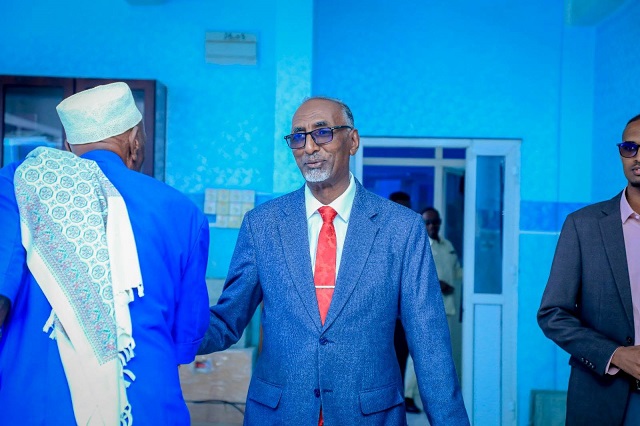
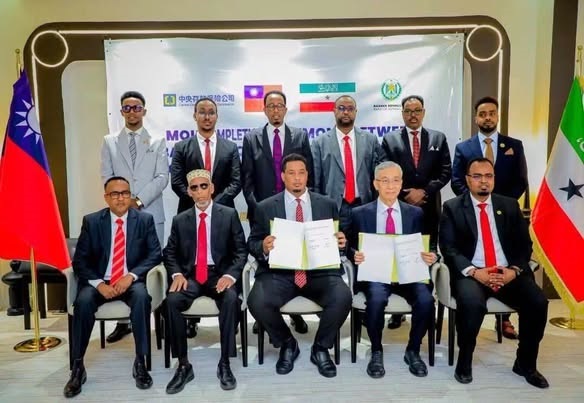
Pictures of the President with executives:


Prepared:
Hornpost staff Reporter