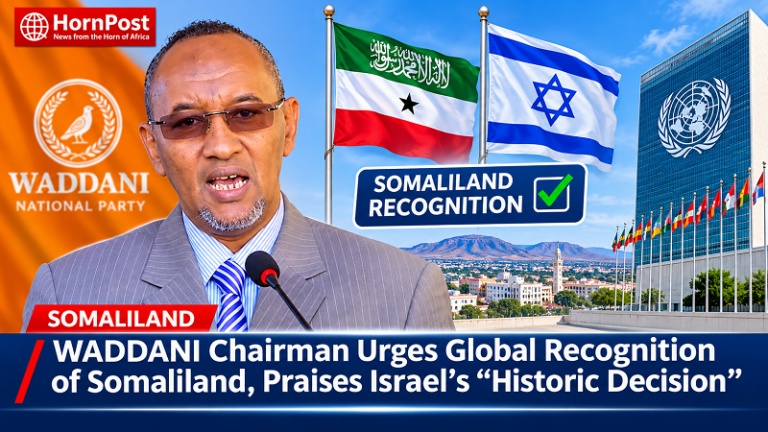
HARGEISA, Somaliland (HornPost)— WADDANI Party Chairman Hirsi Ali Haji Hassan has called on the international community to recognize Somaliland as an independent state.
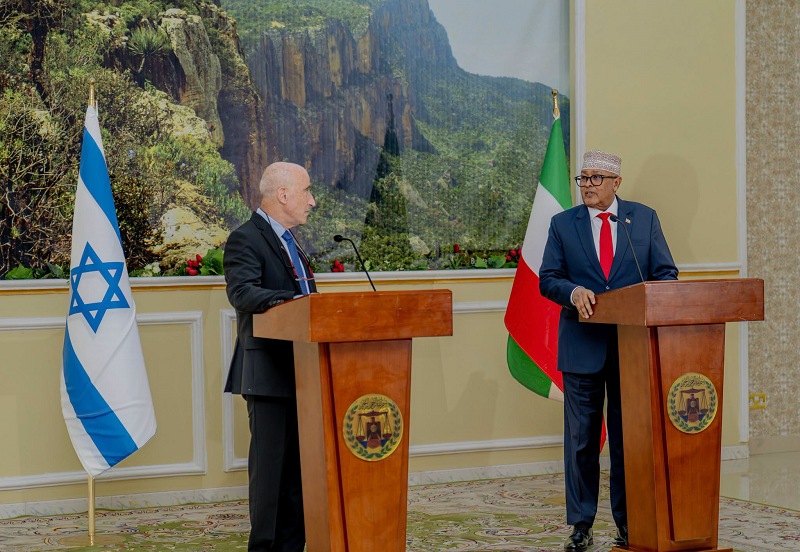
He urged United Nations member states to follow Israel’s decision to recognize Somaliland. He described the move as a historic step based on Somaliland’s history and political circumstances.
Speaking to the media, Hirsi said he was conveying the message of Somaliland’s people. He described them as patient and determined in their pursuit of international recognition.
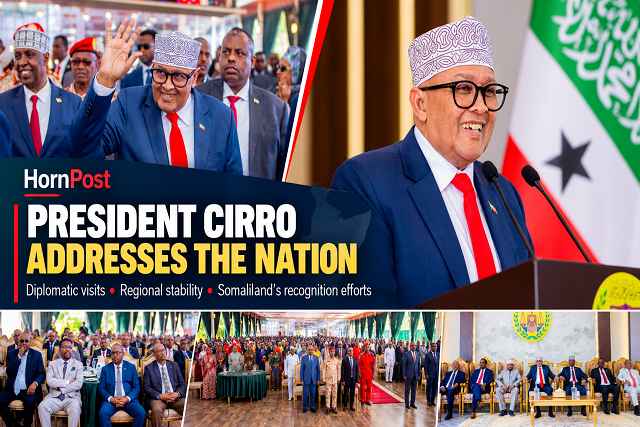
He also praised President Abdirahman Mohamed Abdillahi Irro for what he called notable diplomatic progress. In addition, he commended Somalilanders for maintaining their demand for recognition over more than three decades.
“I extend our heartfelt gratitude to the State of Israel for its courageous and principled decision,” Hirsi said. “This historic step will be remembered, and the people of Somaliland will never forget it.”
Somaliland’s Independence and the 1960 Union
Hirsi traced Somaliland’s political history to June 26, 1960. On that date, British Somaliland gained independence.
Five days later, Somaliland united with the former Italian-administered territory to form the Somali Republic.
However, Hirsi argued that the union lacked a proper legal foundation. He said Somaliland entered the arrangement without equal political representation.
He also recalled opposition to the union among Somaliland politicians, intellectuals and public figures.
According to Hirsi, these concerns became clear during the 1961 constitutional referendum. He claimed that around 90% of Somaliland voters rejected the proposed constitution.
He said the vote reflected widespread dissatisfaction with the terms of the union.
Political Opposition and Repression
Hirsi said opposition to the union grew during 1961. He referred to public protests, ministerial resignations and a failed military coup attempt by junior officers.
The officers, according to his account, sought to restore Somaliland’s independence.
He also described arrests, curfews and killings during the years that followed.
As an example, Hirsi cited the execution of five businessmen in Burao. He said the incident represented the repression experienced by Somaliland communities under successive Somali governments.
SNM Struggle and Civilian Casualties
The WADDANI chairman identified the establishment of the Somali National Movement (SNM) in 1981 as a major turning point.
The movement fought against the government of former Somali President Mohamed Siad Barre.
Hirsi said the conflict intensified in 1988, when SNM forces launched operations in Somaliland’s major cities.
He claimed that more than 50,000 civilians died during the military campaign. He also said hundreds of thousands of people fled to neighboring countries as refugees.
Furthermore, he referred to alleged massacres in places including Malkadurduro and Kasher. He also mentioned Jazira in Mogadishu.
Hirsi said more than 200 mass graves had been documented. These figures and historical accounts reflect the claims made in his speech.
Somaliland Restores Its Sovereignty in 1991
Following the collapse of Somalia’s central government in 1991, Somaliland’s traditional and political leaders gathered at a conference in Burao.
Hirsi said the conference took place in May 1991. He described the decision to restore Somaliland’s independence as a unanimous response to the failure of the union.
He also highlighted developments that followed the declaration.
According to Hirsi, Somaliland began rebuilding its institutions through local reconciliation and disarmament efforts.
He said the territory established functioning government institutions by 1993. It later adopted a multiparty democratic system.
Hirsi also cited the constitutional referendum, in which he said 97% of voters approved Somaliland’s constitution.
He noted that Somaliland has experienced peaceful transfers of power across six presidencies. Four presidents, he said, won office through direct public elections.
Somaliland-Somalia Talks Failed to Resolve Dispute
The WADDANI chairman also discussed Somaliland’s negotiations with Somalia.
He said Somaliland had participated in several rounds of dialogue following requests from the international community.
However, he argued that the talks held between 2021 and 2023 failed to produce lasting results.
Hirsi accused Somalia of failing to implement agreements reached during the negotiations. He also claimed that some agreements were later cancelled unilaterally.
“For 34 years, Somaliland has governed itself responsibly, developed its institutions, and maintained stability without international recognition,” he said.
He also compared Somaliland’s governance record with Somalia’s continuing security and political challenges.
Chairman Raises Concerns Over International Pressure
Hirsi criticized what he described as international pressure against Somaliland.
He referred to economic restrictions, limits on aid and measures affecting air travel. He also mentioned the introduction of electronic visa requirements as an example of the challenges facing Somaliland.
Despite these concerns, he said Somaliland had continued to cooperate with regional and international partners.
He highlighted its role in promoting peace and security across the Horn of Africa. He also referred to cooperation against terrorism and other regional security threats.
WADDANI Chairman Calls for Wider International Recognition
In his closing remarks, Hirsi described Israel’s recognition of Somaliland as an acknowledgment of historical and political realities.
He urged other countries, particularly UN member states, to consider taking similar steps.
He said Somaliland had maintained its own institutions and democratic processes for decades. Therefore, he argued, the international community should recognize its political status.
“We call upon the international community to recognize Somaliland for its unwavering commitment to democracy, stability, and constructive engagement with regional and global partners,” Hirsi said.
“Recognition is not a favor; it is a rightful acknowledgment of an existing state.”
His remarks add to Somaliland’s ongoing diplomatic campaign for wider international recognition. The government and political leaders continue to present Somaliland’s history, governance record and strategic position as central parts of their case.
HornPost Staff Reporter
info@hornpost.com
www.hornpost.com
Hargeisa, Somaliland