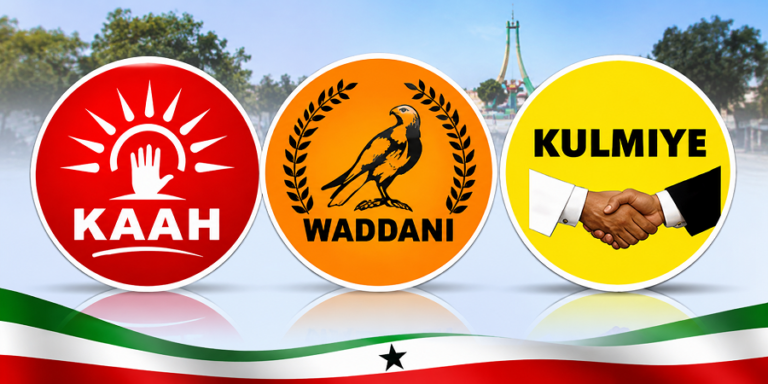
HARGEISA, Somaliland (Horn Post) — Somaliland’s three national political parties have held talks in Hargeisa over preparations for the 2026 local council and parliamentary elections, with disagreements emerging over the voter registration system.
Representatives of Kulmiye, Waddani and Kaah met on Tuesday to discuss key electoral arrangements, particularly the framework for registering voters ahead of the upcoming polls.
The meeting highlighted differences among the parties over how Somaliland should organize voter registration. Although the discussions showed a willingness to pursue dialogue, the participants did not reach a common position on the issue.
Kulmiye and Waddani Call for Electoral Commission Decision
During the discussions, the ruling Waddani Party and opposition Kulmiye Party reached a common position on the way forward.
Both parties proposed referring the voter registration issue to the National Electoral Commission (NEC). They want the commission to assess the available options and determine an appropriate registration mechanism.
The proposal reflects their position that the electoral commission should play a central role in resolving technical questions surrounding voter registration.
Furthermore, the two parties appear to favor a coordinated approach that could reduce political disagreements and prevent disputes during the electoral process.
Voter registration remains one of the most important stages of Somaliland’s elections. The process determines who can participate in the polls and helps establish the credibility of the final results.
Kaah Party Plans to Present Its Position
The Kaah Party, meanwhile, did not join the joint position reached by Kulmiye and Waddani.
Instead, its representatives said the party would announce its official position at a later stage. Kaah also indicated that it intends to present alternative proposals on the voter registration framework.
The party said its approach would emphasize fairness, inclusivity and electoral integrity.
Its position could become an important part of the ongoing discussions, particularly as the three parties seek an agreement on the technical and political arrangements for the 2026 elections.
Senior Party Leaders Attend the Meeting
Senior representatives from all three national parties attended the Hargeisa meeting.
They included:
- Hirsi Ali Hassan, chairman of the Waddani Party.
- Abdullahi Ibrahim Habane, deputy chairman of the Kaah Party.
- Mohamed Kahin Ahmed, chairman of the Kulmiye Party.
The participation of senior party leaders highlights the political importance of the discussions. It also signals the parties’ willingness to address electoral disagreements through direct consultations.
Electoral Disagreements Raise Questions Ahead of 2026 Polls
The discussions come as Somaliland prepares for another important stage in its democratic process.
The 2026 local council and parliamentary elections carry significant political importance. Their successful organization will depend on cooperation among political parties, the electoral commission and other institutions involved in the process.
However, disagreements over voter registration could complicate preparations if the parties fail to reach an agreement.
A credible registration system is essential to ensuring that eligible voters can participate. It also helps strengthen public confidence in the electoral process and reduce the risk of political disputes.
For this reason, civil society organizations and other stakeholders have emphasized the importance of dialogue, transparency and consensus among political actors.
Dialogue Remains Key to Electoral Preparations
Despite the differences that emerged during Tuesday’s meeting, the parties have an opportunity to continue negotiations and seek common ground.
A mutually accepted voter registration framework could help create the conditions for peaceful, transparent and credible elections.
Further consultations among the three parties are expected in the coming days. Attention will now turn to whether Kaah presents its proposed alternatives and whether the National Electoral Commission becomes directly involved in resolving the disagreement.
With preparations for the 2026 elections gaining importance, the ability of Somaliland’s political parties to reach agreement on electoral procedures will remain a key test of their commitment to the country’s democratic process.
Horn Post Staff Reporter
Hargeisa, Somaliland
info@hornpost.com
www.hornpost.com