HARGEISA, Somaliland (HornPost) — More than half of households surveyed in Somaliland say their incomes have failed to keep pace with rising living costs over the past five years, according to a new report by research organization DOOR Center.
The report, titled “Rising Living Costs in Somaliland: Drivers, Household Impacts and Policy Responses,” examines the factors behind increasing living costs, their impact on households and policy measures that could help ease the economic pressure.
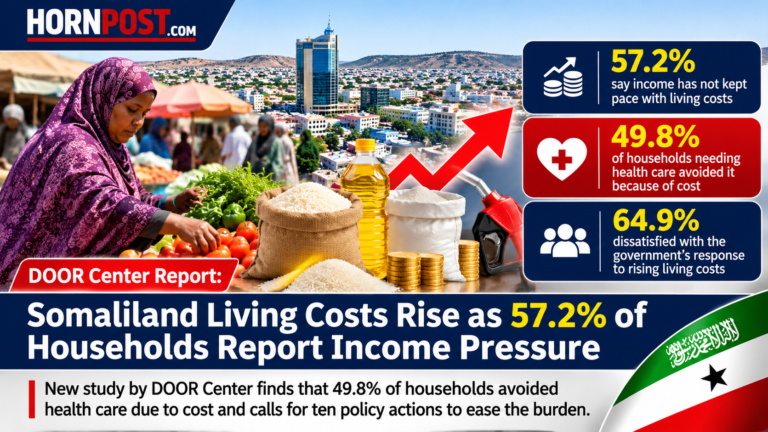
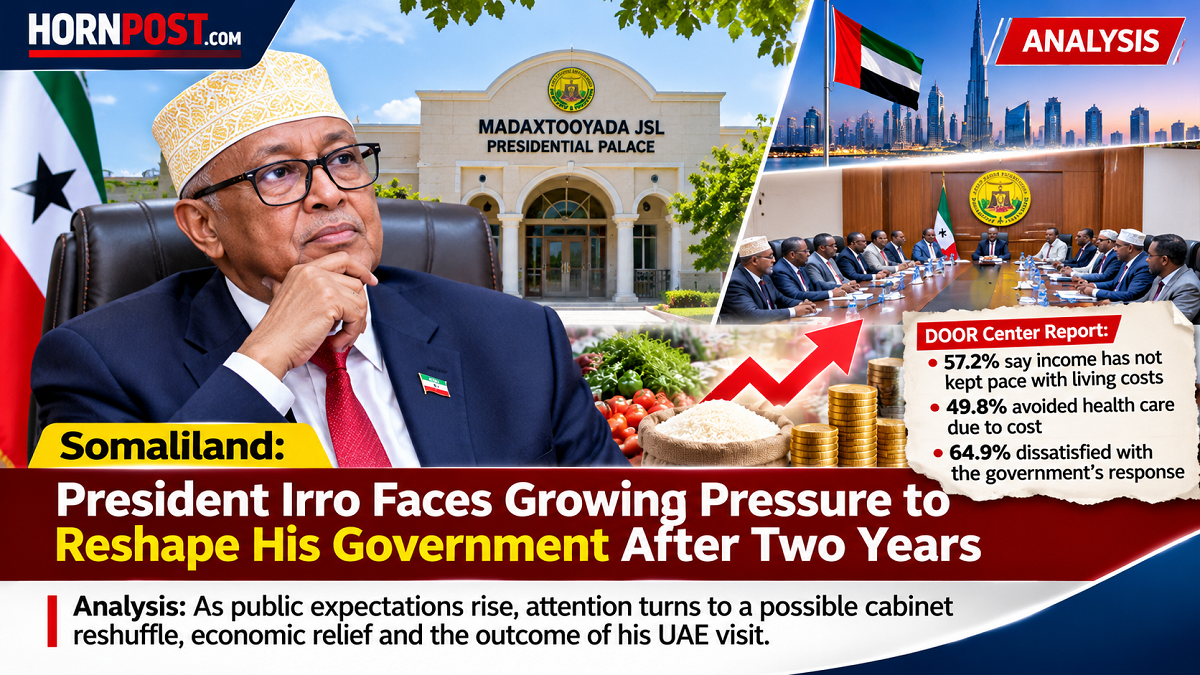
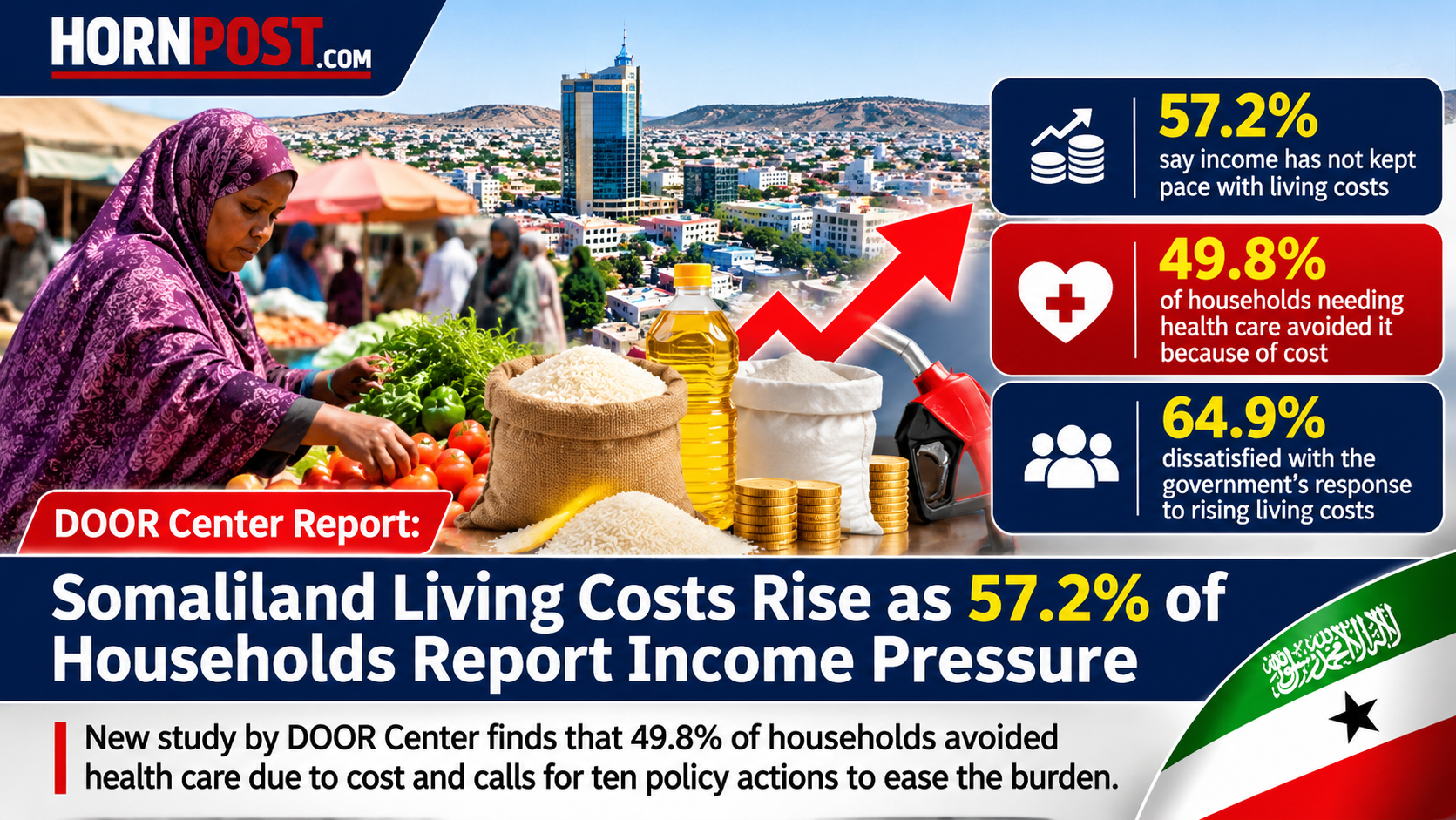
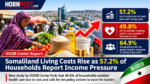
According to the findings, 57.2% of surveyed households said their incomes had not kept pace with the rising cost of living. Meanwhile, 59.1% reported monthly household incomes of $300 or less.
The research is based on interviews with 626 households across six Somaliland cities: Hargeisa, Burco, Borama, Berbera, Erigavo and Caynaba. The household survey was conducted between August 14 and 17, 2026.
Nearly Half of Households in Need Avoided Health Care Because of Costs
One of the report’s most significant findings concerns the impact of rising living costs on access to health care.
DOOR Center found that 49.8% of households that needed health care during the previous 12 months avoided treatment because they could not afford the costs.
The most difficult health care expenses included laboratory tests, cited by 52.2% of respondents, prescribed medicines at 47.8%, and diagnostic imaging services at 41.2%.
The report also found that 68.1% of surveyed households expect living costs to increase further over the next 12 months.
Food Prices, Fuel Costs and Currency Depreciation
The report identifies the depreciation of the Somaliland shilling against the US dollar, rising prices of imported goods and higher fuel costs as major factors contributing to increasing household expenses.
Some 62.8% of households identified the depreciation of the shilling as a key driver of rising costs, while 52.2% pointed to higher prices of imported goods.
According to the report, the cost of a fixed basket of nine essential food and household products increased by 16.63% in US dollar terms between 2022 and 2026. However, when measured in Somaliland shillings, the increase reached 49.59%.
The basket includes rice, pasta, sugar, wheat flour, powdered milk, cooking oil, tea and household cleaning products.
Fuel prices have also increased significantly. The price of petrol, which stood at SLSH 5,800 per litre in 2021, rose to between SLSH 13,000 and SLSH 14,500 in 2026, according to the report.
However, electricity tariffs were among the few major household expenses that declined in 2026 compared with 2025.
Different Cities Face Different Economic Pressures
The report highlights significant differences in how rising living costs affect households across the six surveyed cities.
Berbera recorded the highest proportion of households reporting that their incomes had failed to keep pace with living costs, at 95.8%.
In Caynaba, 90% of surveyed households reported monthly incomes of $300 or less. The town also recorded the highest proportion of households that avoided health care because of cost, at 63.3%.
In Hargeisa, the report identified a high dependence on single-income households, alongside substantial spending on food and transportation.
Borama and Burco also face considerable economic pressures, particularly in household incomes, transportation expenses and access to affordable health care.
DOOR Center Proposes 10 Policy Recommendations
DOOR Center outlined 10 recommendations for the Somaliland government and relevant institutions to address the rising cost of living.
The recommendations include:
- Currency and price stability: Strengthen exchange-rate stability and regularly monitor the prices of essential goods.
- Tax relief: Reduce taxes and charges on essential food products.
- Employment and income generation: Create more job opportunities through public works, vocational training and apprenticeships.
- Affordable health care: Reduce the cost of medical services, particularly diagnostic tests and medicines.
- Affordable water: Improve access to water and monitor household water expenses.
- Fuel and transportation: Review fuel subsidy policies and monitor their impact on transport costs.
- Education support: Reduce education-related expenses and support low-income families with school materials.
- Domestic production: Invest in local food production, agriculture and water-efficient irrigation.
- Trade and business support: Improve logistics, address port and inland transportation bottlenecks, and expand access to business financing.
- Public accountability: Establish a public monitoring system to track government relief measures, their costs, coverage and results.
The report identifies the Government of Somaliland as the primary institution responsible for implementing the proposed measures, while recommending that the Bank of Somaliland take a leading role in exchange-rate stability.
Majority of Households Dissatisfied With Government Response
The study also examined public satisfaction with the government’s efforts to address rising living costs.
It found that 64.9% of respondents were dissatisfied or very dissatisfied with the Government of Somaliland’s efforts and plans to tackle the issue, compared with 26% who expressed satisfaction.
DOOR Center said the findings point to a gap between government-reported measures and the relief households can visibly experience and verify.
The report concludes that the cost-of-living challenge is not simply about the rising price of individual products. Rather, it reflects the combined burden of food, rent, water, electricity, education, health care and transportation expenses relative to household incomes.
It recommends targeted assistance for vulnerable households, evidence-based economic policies and a transparent public monitoring system to assess the effectiveness of government interventions.
SOURCE: DOOR Center, Rising Living Costs in Somaliland: Drivers, Household Impacts and Policy Responses – Summary Report, November 2026.
Prepared by:
HornPost staff
info@hornpost.com
www.hornpost.com
 HornPost