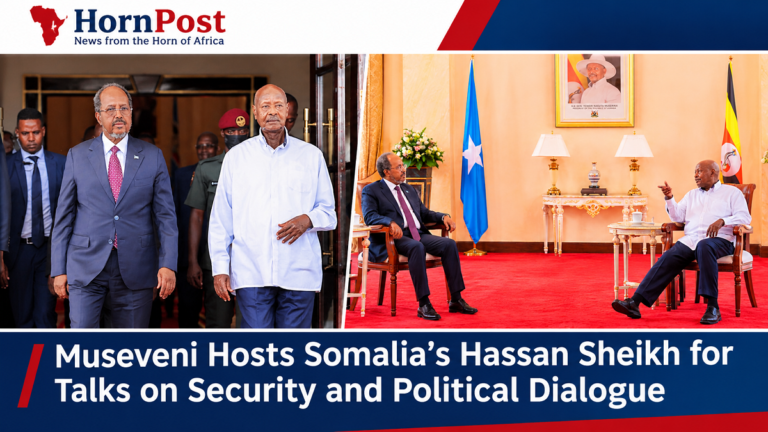
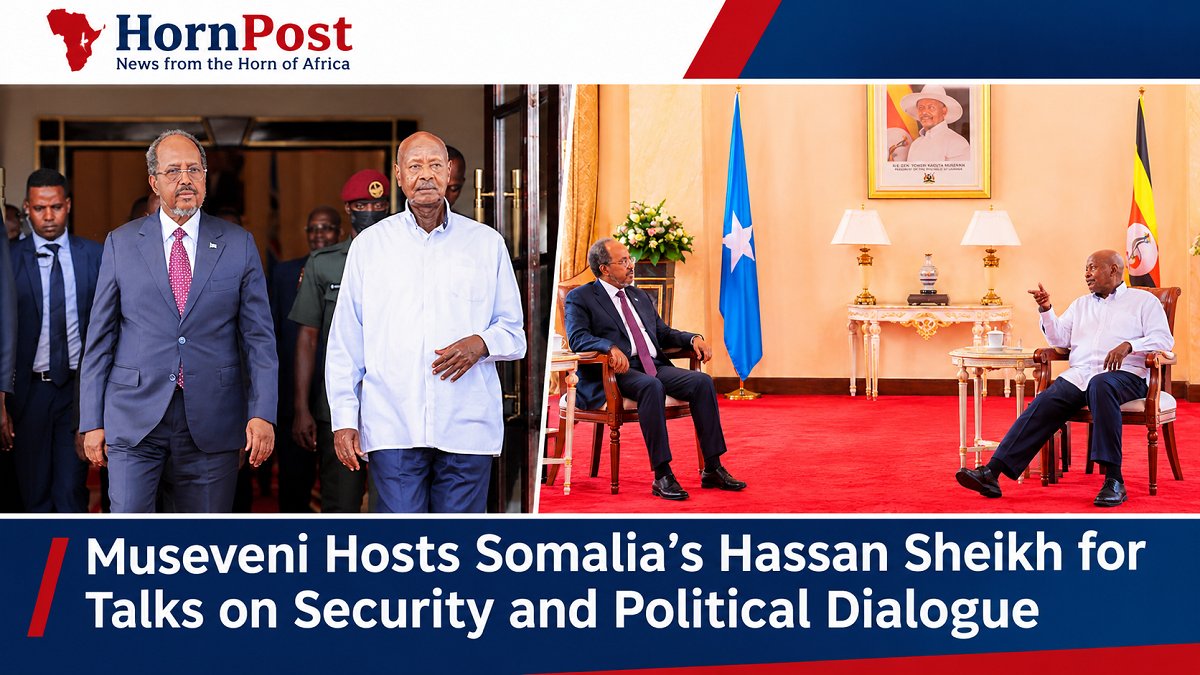
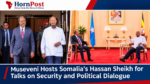
ENTEBBE, Uganda (HornPost)— Ugandan President Yoweri Kaguta Museveni hosted his Somali counterpart, Hassan Sheikh Mohamud, at State House in Entebbe on Monday for talks on bilateral relations, regional security and Somalia’s political situation.
The meeting comes as Somalia faces growing political tensions over constitutional changes, the electoral process and the future of its federal institutions. It also comes at a critical time for security cooperation, as Uganda reviews its military presence in Somalia.
In a statement published on X, Uganda’s State House said the two leaders discussed bilateral relations, democracy, national unity and inclusive governance. They also reviewed efforts to restore peace and stability in Somalia.
The Somali presidency separately confirmed the meeting. It said both leaders reaffirmed their commitment to strengthening the strategic partnership between Mogadishu and Kampala.
According to Villa Somalia, discussions covered security cooperation, trade, regional peace and stability, and the fight against international terrorism. President Hassan Sheikh also thanked Museveni for inviting him to Uganda and for the hospitality extended to his delegation.
Somalia’s Political Crisis Adds Importance to the Meeting
The talks took place against the backdrop of a prolonged political dispute between Somalia’s federal government and opposition groups.
The main disagreements concern constitutional amendments, the electoral framework and the mandates of federal institutions. Opposition leaders have challenged the government’s position on the extension of institutional mandates and have called for an inclusive political agreement.
President Hassan Sheikh has recently renewed his invitation to opposition leaders to hold direct talks. He has also indicated his willingness to meet them at a venue of their choice.
However, the Somali Future Council, an opposition coalition that includes prominent political figures and leaders from Puntland and Jubaland, has called for international mediation.
The group previously declined to participate in talks hosted by Villa Somalia, arguing that an independently facilitated process would help build confidence and ensure that any agreement receives broad support.
The United Nations has also highlighted the political dispute in its recent reporting on Somalia. Previous mediation efforts involving international partners, including the United States, United Kingdom, European Union and Türkiye, have struggled to bridge differences between the government and opposition.
Could Museveni Help Mediate Between Somalia’s Political Rivals?
Reports from independent sources suggest that Museveni could play a role in encouraging dialogue between President Hassan Sheikh and opposition leaders.
The reported possibility of mediation would give the Entebbe meeting significance beyond ordinary diplomatic relations. However, neither the Ugandan nor Somali presidential statements publicly confirmed that the two leaders agreed on a formal mediation process.
If Museveni becomes involved, his role could focus on bringing the rival political groups back to negotiations. Such an initiative could also involve international partners, particularly the United States and United Kingdom, which have previously supported efforts to promote political dialogue in Somalia.
Nevertheless, the success of any mediation would depend on the willingness of both sides to compromise. Opposition groups have demanded guarantees and an inclusive process, while the federal government has continued to call for direct Somali-led negotiations.
The central challenge remains reaching agreement on constitutional issues and the electoral framework before the next national elections.
Uganda’s Military Role and Somalia’s Security Transition
Security cooperation was another major issue behind the meeting.
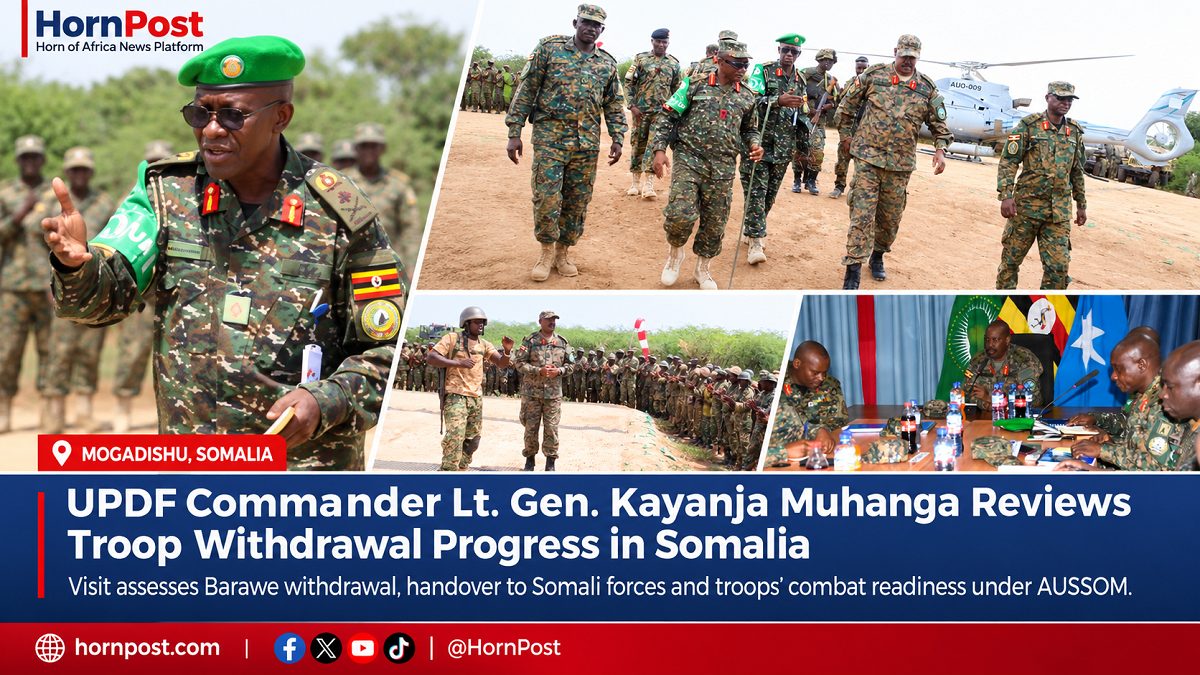
Uganda has played a central role in Somalia’s security operations since 2007. Its troops have supported successive African Union missions and helped Somali forces fight the al-Shabaab militant group.
However, Uganda’s military presence is now entering a period of transition. Reports indicate that Ugandan troops serving under separate bilateral arrangements have begun a phased withdrawal.
This development raises important questions about Somalia’s ability to assume greater responsibility for national security.
The two countries therefore have a shared interest in maintaining cooperation and avoiding security gaps. Any reduction in foreign troop deployments could affect operations against al-Shabaab if Somali forces and other international partners are not adequately prepared.
The future of the African Union Support and Stabilization Mission in Somalia (AUSSOM) is also important. Its funding, troop contributions and operational capacity remain central to Somalia’s security transition.
Museveni Accepts Invitation to Visit Somalia
A further development emerged from the meeting when President Hassan Sheikh invited Museveni to visit Somalia.
According to a joint communiqué reported by Dawan Africa, the Ugandan president accepted the invitation. The two governments will agree on the dates through diplomatic channels.
The leaders also called for stronger military operations against al-Shabaab and adequate, predictable and sustainable funding for AUSSOM.
The reported agreement signals continued engagement between the two governments on security and economic cooperation.
Analysis: A Diplomatic Meeting With Wider Political Implications
The Entebbe meeting could become an important diplomatic moment for Somalia, particularly because it comes during a period of political uncertainty.
For President Hassan Sheikh, maintaining strong relations with Uganda is important for both security cooperation and regional diplomacy. Uganda remains a key partner in Somalia’s efforts to strengthen its security institutions and combat al-Shabaab.
At the same time, the possibility of Museveni encouraging talks between the government and opposition could offer another channel for resolving the political deadlock.
Museveni has extensive experience in regional diplomacy and has maintained close relations with Somali political leaders. His involvement could help create space for dialogue, especially if both sides accept his role.
However, diplomatic engagement alone cannot resolve Somalia’s political crisis. The government and opposition must agree on the rules governing elections, constitutional reforms and the transfer of political power.
There is also a wider regional interest in preventing political divisions from weakening Somalia’s security institutions. A prolonged dispute could distract the government from fighting al-Shabaab and managing the transition of security responsibilities from international forces to Somali troops.
Ultimately, the significance of the Entebbe meeting will depend on what follows. If it leads to credible political dialogue and stronger security cooperation, it could contribute to stability in Somalia. If not, it may remain another diplomatic engagement without a lasting political breakthrough.
Sources: Uganda State House, Villa Somalia, SONNA, Dawan Africa and independent media reporting.
Prepared by:
HornPost Staff Reporter
info@hornpost.com
www.hornpost.com
 HornPost