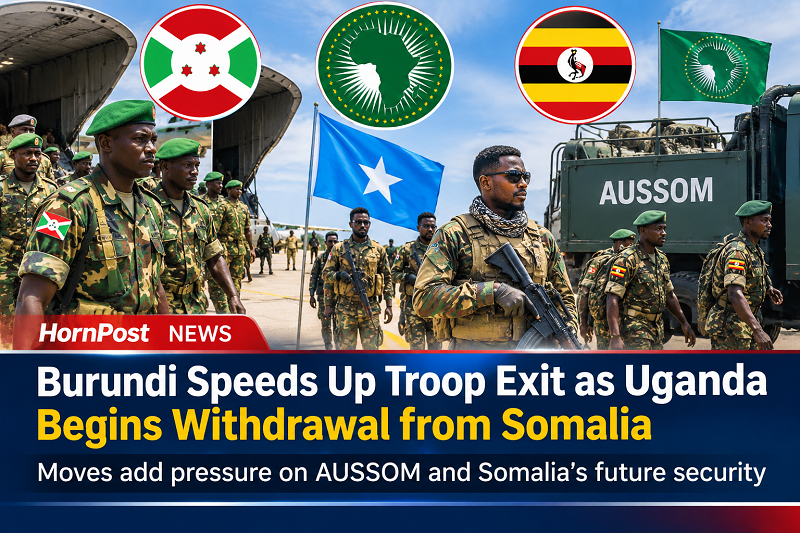
The departures raise questions about the future of the African Union mission and Somalia’s ability to assume greater responsibility for national security.
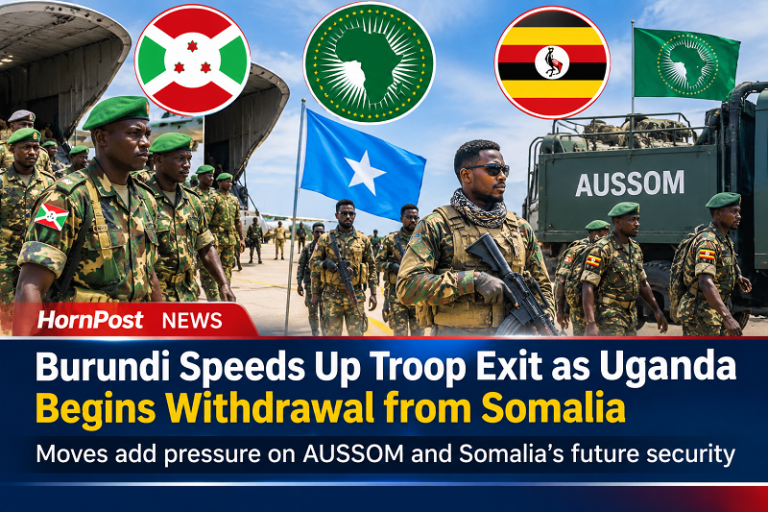
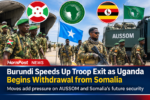
MOGADISHU, Somalia (HornPost) — Burundi is reportedly accelerating plans to withdraw its remaining troops from Somalia, adding to growing changes in the international military presence as Uganda begins a phased withdrawal after nearly two decades in the country.
The developments have renewed questions about the future of the African Union Support and Stabilization Mission in Somalia (AUSSOM), particularly its troop strength, funding and ability to support Somali security forces as they take on greater responsibility for the country’s security.
According to a report published Thursday citing Africa Intelligence, Burundi is seeking to speed up the repatriation of its remaining troops before the end of AUSSOM’s current mandate. The report cited logistical challenges, including arrangements for transporting personnel and military equipment.
Burundi has been part of the African Union’s military presence in Somalia since December 2007. Its forces participated in operations against al-Shabab and efforts to secure key locations.
However, Burundi’s participation in AUSSOM became uncertain following disagreements with the Somali government over troop numbers. Burundi had proposed contributing about 3,000 soldiers, while Mogadishu reportedly preferred a smaller contingent.
The disagreement led Burundi to withdraw its pledge to contribute troops to the new mission. The African Union subsequently called for an orderly repatriation of the remaining Burundian forces to avoid creating a security vacuum.
Uganda Begins Phased Withdrawal
Burundi’s reported plans come as Uganda has already started withdrawing troops from Somalia under a separate bilateral arrangement with the federal government.
Uganda announced on Nov. 2 that the first group of troops had returned home. The withdrawal is part of a broader plan to remove all Ugandan forces from Somalia, including those serving under AUSSOM, by the end of 2027.
Uganda first deployed troops to Somalia in 2007 and became one of the leading contributors to the African Union mission. It currently has thousands of personnel serving in the country.
The initial withdrawal involves troops deployed under the bilateral agreement. Uganda has said the wider drawdown will take place gradually.
The departure has raised concerns about possible security gaps, particularly in areas where Ugandan forces have been operating.
The Associated Press reported that AUSSOM plans to take over four positions near Mogadishu previously held by Ugandan troops: Sabid-Anole, Bariire, Awdheegle and Bulonagad. The planned handover is intended to prevent al-Shabab from exploiting gaps during the transition.
Egypt’s Role and the Future of AUSSOM
The African Union has also been working to manage the transition between troop-contributing countries.
In a February 2026 communiqué, the AU Peace and Security Council welcomed Egypt’s readiness to deploy forces to Somalia. It called for the deployment to be coordinated with the repatriation of Burundi’s troops to prevent a security vacuum.
The same communiqué highlighted the need for sustainable and predictable funding for AUSSOM. It also called for discussions among troop-contributing countries on the mission’s future structure and operations. <
The mission’s mandate has been authorized by the U.N. Security Council through Dec. 31, 2026. The council authorized the deployment of up to 11,826 uniformed personnel, including police officers, and stressed that additional financial support is needed for both AUSSOM and Somali security forces.
The mission’s future will therefore depend not only on troop contributions but also on funding, operational planning and the capacity of Somali forces to take over security responsibilities.
Turkey Denies Plans to Send 15,000 Troops
Meanwhile, Türkiye’s Defense Ministry on Nov. 12 denied reports that Ankara plans to deploy 15,000 troops to Somalia.
The ministry said the claims that Türkiye would send the troops at the request of the Somali government did not reflect the truth.
It confirmed, however, that the Somali-Turkish Task Force and Air Component Command remain in Somalia, providing military assistance, training and advisory support to strengthen the country’s counterterrorism capabilities.
The statement clarified Türkiye’s position amid speculation about possible changes to the foreign military presence in Somalia.
Somalia Faces a Critical Security Transition
The withdrawal plans involving Burundi and Uganda come at a significant point in Somalia’s security transition.
Somali forces have increasingly been expected to take responsibility for operations against al-Shabab, but the transition remains dependent on military capacity, equipment, funding and continued international support.
The departure of experienced African Union contingents could place additional pressure on Somali forces, particularly if replacements are delayed or funding problems limit the mission’s operational capacity.
For now, Burundi’s reported accelerated withdrawal and Uganda’s phased drawdown do not mean that the African Union mission is ending. However, they underline the challenges facing AUSSOM as its current mandate approaches its deadline.
The central question remains whether Somalia and its international partners can manage the changes without creating security gaps that al-Shabab could exploit.
Prepared by:
HornPost staff
info@hornpost.com
www.hornpost.com