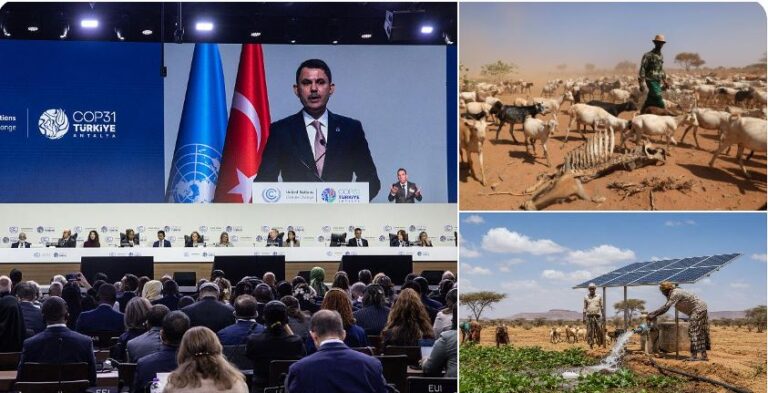
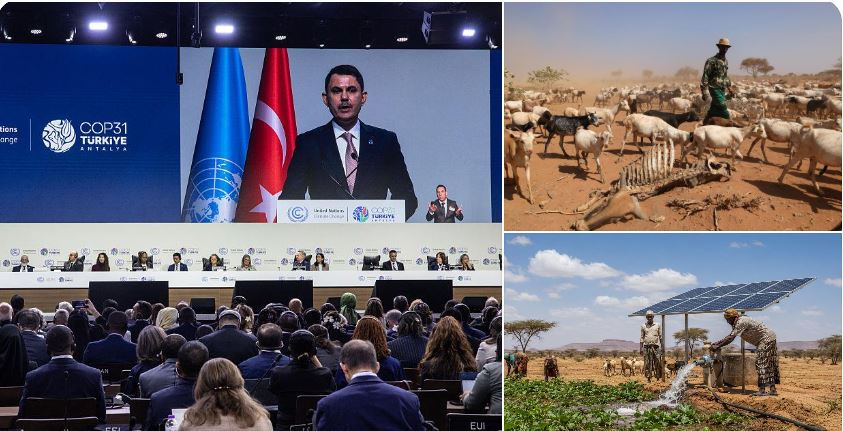
ANTALYA, Turkey (HornPost) — African countries are urging world leaders to increase climate financing and strengthen preparations for droughts and floods. They are also calling for greater support for vulnerable communities as the United Nations COP31 climate summit opens in Antalya, Turkey.
The November 9-20 conference brings together governments, climate negotiators, international organizations and civil society groups. They are discussing ways to turn existing climate commitments into practical action.
For Africa, the negotiations are particularly important. The continent contributes a relatively small share of global greenhouse gas emissions. However, it faces serious consequences from climate change. These include rising temperatures, changing rainfall patterns, prolonged droughts and severe floods.
The situation is especially concerning in the Horn of Africa. Millions of people depend on rain-fed agriculture and livestock for their livelihoods. Meanwhile, repeated droughts, water shortages and climate-related displacement continue to put pressure on vulnerable communities.
Africa Calls for Greater Climate Financing
Access to reliable and affordable climate finance is one of Africa’s main priorities at COP31.
The United Nations Economic Commission for Africa (UNECA) says African countries will push for stronger support for climate adaptation. They also want effective loss-and-damage arrangements and reforms to the international climate financing system.
In addition, African governments are calling for a fair energy transition. They want to expand electricity access while making better use of renewable energy resources.
The Africa Pavilion at COP31 provides a platform for governments, researchers, businesses and civil society groups. It is supported by institutions including the African Union Commission, the African Development Bank and UNECA.
Through this platform, African representatives can coordinate their priorities and strengthen cooperation on climate action.
Horn of Africa Faces Growing Climate Risks
The Horn of Africa remains highly exposed to climate-related disasters.
Somalia, Somaliland, Ethiopia, Kenya and Djibouti regularly face droughts, unpredictable rainfall, water shortages and flooding.
For pastoral communities, prolonged dry seasons threaten livestock and reduce access to grazing land. As a result, many families face declining incomes and greater food insecurity.
Agricultural communities also face serious challenges. Changing rainfall patterns affect crop production, food supplies and rural employment.
Furthermore, these pressures can increase displacement and competition over natural resources. They also create additional humanitarian needs.
The International Drought Resilience Alliance has highlighted the region’s exposure to severe drought. It has also stressed the importance of moving beyond emergency responses towards long-term drought preparedness.
El Niño Raises Concerns Over Food Security
Another major concern at COP31 is the potential impact of the anticipated 2026-2027 El Niño climate phenomenon.
The African Union has identified early warning systems, better preparedness and investment in water infrastructure as key priorities.
Meanwhile, a Reuters report published on November 10 warned that climate shocks could push an additional 49 million people worldwide into acute food insecurity by the end of 2027.
The report also highlighted the need to make climate adaptation funding more accessible to small-scale farmers and local organizations. These groups often lack the financial resources to prepare for extreme weather events.
Water Security Becomes a Major African Priority
Water security is expected to feature prominently in Africa’s participation at COP31.
The African Union has scheduled a high-level Africa Day programme for November 12. Its theme focuses on securing Africa’s water through climate resilience, early action and climate finance.
The programme highlights several priorities. These include investment in water and sanitation infrastructure, irrigation and climate-smart agriculture.
It also emphasizes improved weather forecasting and disaster preparedness. In addition, it aims to strengthen cooperation between African governments and international development partners.
The discussions come as Ethiopia prepares to host COP32 in Addis Ababa in 2027. This will give Africa another major opportunity to highlight its climate priorities.
What COP31 Could Mean for Somaliland and the Wider Horn of Africa
For Somaliland and neighbouring countries, the discussions in Antalya have important implications beyond international diplomacy.
Greater access to climate finance could support several key areas:
- Water infrastructure: Developing reliable water supplies, reservoirs, boreholes and better water management systems.
- Livestock resilience: Improving veterinary services, protecting grazing areas and preparing pastoral communities for droughts.
- Renewable energy: Expanding solar power and affordable electricity in rural communities.
- Agriculture: Supporting irrigation, climate-resilient crops and modern farming practices.
- Early warning systems: Improving weather forecasts and communication to help communities prepare for droughts and floods.
- Coastal protection: Protecting fishing communities and coastal infrastructure from environmental damage and rising sea levels.
For Somaliland, climate adaptation is particularly important. Its economy and rural communities depend heavily on livestock, rainfall and groundwater.
However, access to international climate finance remains a major challenge. The region also needs technical expertise and long-term investment to strengthen its resilience.
From Climate Promises to Practical Action
COP31 comes at a critical moment for international climate cooperation.
Developing countries want wealthier nations to provide stronger financial support. This includes funding for climate adaptation, renewable energy and recovery from climate-related disasters.
However, African countries are looking beyond promises and declarations. They want practical programmes that deliver funding, infrastructure and long-term solutions.
For the Horn of Africa, the stakes are particularly high. Better water systems, resilient agriculture and improved early warning services could protect millions of people.
Investment in sustainable energy could also strengthen rural livelihoods and support economic development.
As negotiations continue through November 20, African governments will seek assurances that their climate priorities receive meaningful attention and financial support.
HornPost Staff Reporter
Email: info@hornpost.com
Website: https://hornpost.com