Hornpost
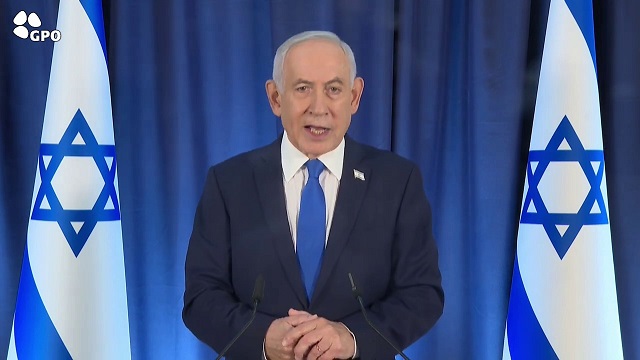
When Benjamin Netanyahu signed Israel’s formal recognition of Somaliland in a live broadcast, the immediate reaction was visible far beyond diplomatic circles.
Across Somaliland, spontaneous celebrations broke out. In the diaspora—from Nairobi to London—Somalilanders marked a moment they had waited more than three decades to see.
For Kenya, the announcement should prompt reflection rather than reflex.
The question Somaliland poses is not a distant or abstract one for Nairobi. It is intertwined with Kenya’s own post-independence history, its hard-won territorial settlement, and its enduring interest in putting to rest—once and for all—the doctrine of Somali irredentism.
To understand why, one must return to the origins of the Somali Republic itself.
On 26 June 1960, Somaliland became independent from Britain as a sovereign state. Five days later, it entered a voluntary union with the former Italian Trust Territory of Somalia. That union was animated by a powerful idea: pan-Somali unity. It was the political expression of Somali irredentism—the belief that all Somali-inhabited territories in the Horn of Africa should be united within a single state.
This ideology did not stop at the borders of the newly formed Somali Republic. It extended to Ethiopia’s Ogaden, Djibouti, and critically for Kenya, the North Frontier District (NFD). Nairobi knows this history intimately.
The Shifta conflict of the 1960s was not a misunderstanding; it was the violent expression of a regional project that challenged Kenya’s territorial integrity.
It is here that Mohamed Haji Ibrahim Egal enters the story in a way that is often overlooked.
Egal was a central figure in Somalia’s early post-independence leadership and served as Prime Minister during a period when Somalia began to recalibrate its relations with neighbors. Crucially, it was during this era that Kenya and Somalia concluded the agreement that brought the NFD conflict to an end, formally renouncing territorial claims and affirming existing borders. That settlement—painful though it was for Somali nationalists—was a cornerstone of regional stability.
Decades later, history took a turn that few could have anticipated. Following Somalia’s collapse, Egal re-emerged as a leading figure in Somaliland and became its second president. Under his leadership, Somaliland explicitly abandoned Somali irredentism, anchoring its claim not in ethnic expansionism but in colonial borders inherited at independence.
This evolution matters profoundly for Kenya:
The original union between Somaliland and Somalia was never fully consummated in law. No mutually ratified Act of Union was enacted. No binding international treaty formalized the merger. Political enthusiasm eclipsed legal clarity, and the consequences proved fatal. By 1991, the Somali state had collapsed, and Somaliland withdrew from a union that had failed both politically and juridically.
What Somaliland reasserted was not a claim to Greater Somalia, but a return to its 1960 borders. In doing so, it aligned itself with the very principal Kenya has long defended: the sanctity of colonial-era boundaries under uti possidetis juris.
This is where Kenya’s strategic interest becomes clear.
A recognized Somaliland, confined to its former British protectorate borders, represents the formal burial of Somali irredentism. It removes, permanently, the ideological foundation that once justified claims over the NFD. It replaces expansionist nationalism with a territorially bound, legally coherent state that has shown, for more than thirty years, a preference for stability over adventurism.
By contrast, continued ambiguity over Somaliland’s status preserves a historical fiction: that the Somali Republic of 1960 remains legally intact, and that its territorial claims—however dormant—remain theoretically unresolved. That ambiguity has never served Kenya’s long-term interests.
Israel’s recognition has not settled these questions. But it has forced them back into public view. It has reminded African policymakers that Somaliland’s case is not about redrawing borders, but about recognizing where borders already were—and where they were voluntarily, and defectively, joined.
Kenya has long positioned itself as a guardian of regional order and legal clarity. It was among the first African states to insist that the NFD question be resolved through law rather than force. In that tradition, Nairobi should see Somaliland not as a destabilizing precedent, but as a stabilizing conclusion to a chapter Africa has struggled to close.
Recognition need not be immediate. But serious reconsideration is overdue.
If Africa wishes to end Somali irredentism not rhetorically, but definitively, it must acknowledge the one Somali polity that has already done so in practice. Somaliland’s case, viewed through Kenya’s own history, is less a threat to the post-colonial order than its logical completion.
Opinion Article author
Sayid Hassan
Kajiado, Kajiado County