Strategic Context: Why Turkey Opposes Somaliland Recognition?
Legal Context: Somaliland’s Statehood Case legit Under International Law.
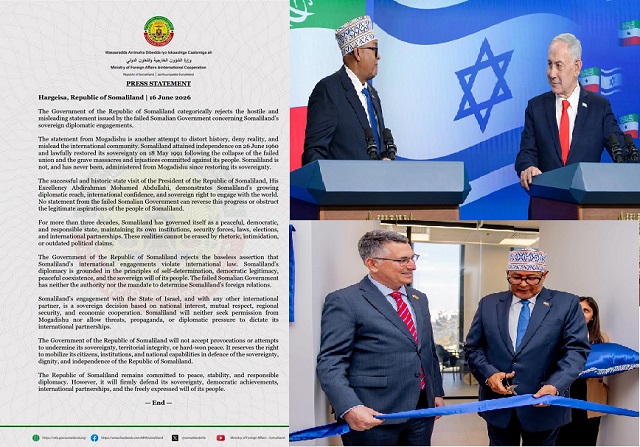
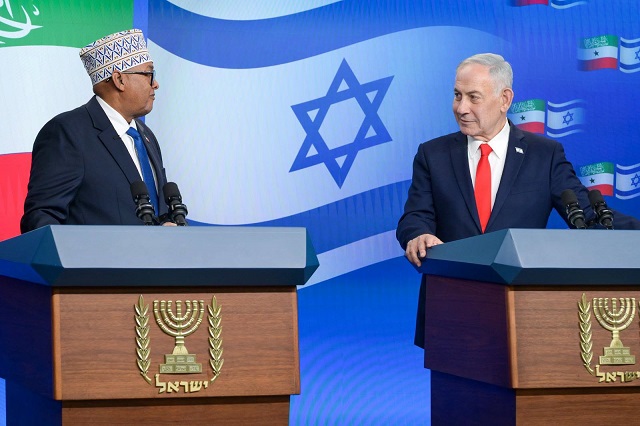
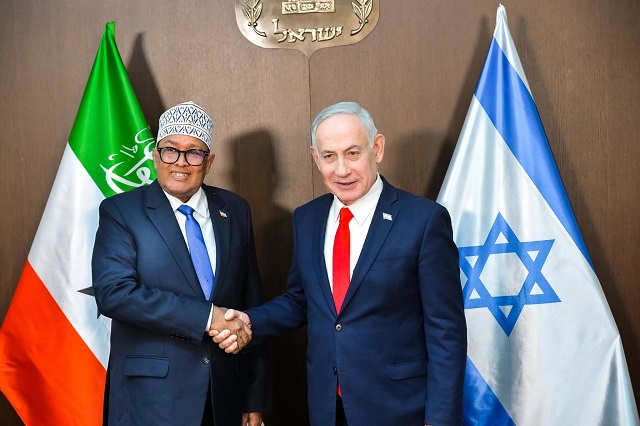
Hargeisa (Horn post) Turkey’s opposition to Somaliland’s recognition—particularly by Israel—extends beyond legal arguments and reflects deeper strategic, economic, and security interests in the Horn of Africa.
Somaliland occupies a highly strategic position along the Gulf of Aden and Bab el-Mandeb, one of the world’s most critical maritime chokepoints. Control and influence in this corridor directly affect global trade, energy routes, and regional security.
In recent years, Turkey has signed multiple agreements with the Federal Government of Somalia covering military cooperation, defense bases, maritime security, oil and gas exploration, and fisheries development. These arrangements have made Somalia a central pillar of Turkey’s regional strategy.
From this standpoint, Somaliland’s growing international recognition—especially by Israel—poses a strategic challenge. An internationally recognized Somaliland would be able to independently negotiate security, port, energy, and defense partnerships, potentially reshaping the balance of influence in the Red Sea–Gulf of Aden corridor.
Analysts argue that Turkey’s framing of Somaliland’s recognition as a violation of international law obscures these strategic calculations. Rather than a neutral legal position, Ankara’s stance increasingly appears designed to protect its geopolitical and economic interests in Somalia, and to prevent the emergence of a new, independent actor in a strategically vital location.
Legal Context: Somaliland’s Statehood Case legit Under International Law
Somaliland’s claim to statehood is grounded not in secession, but in the principle of state continuity under international law.
In 1960, Somaliland was a fully sovereign state. It met all criteria for statehood, gained recognition from 35 countries, and entered into diplomatic relations. Crucially, its sovereignty was never lawfully surrendered.
The subsequent union with Somalia failed legally. Although political intent to unite existed, the union was never finalized through a ratified Act of Union accepted by both sides. Without such a treaty, no lawful merger occurred. Under international law, annexation or a failed union cannot extinguish an existing state.
This undermines Somalia’s reliance on the principle of territorial integrity, which applies only to a state’s lawfully acquired territory. Territorial integrity is a defensive shield, not a legal basis for claiming territory never formally integrated.
The African Union’s 2005 Fact-Finding Mission confirmed this legal reality, concluding that the union between Somaliland and Somalia was never legally ratified and malfunctioned throughout its existence. The AU described Somaliland’s case as historically unique and warned against linking it to fears of destabilizing Africa.
Legally speaking, recognizing Somaliland today does not create a new state. It acknowledges a state that already exists and whose sovereignty was never extinguished.
Prepared by:
Horn post staff reporter
info@hornpost.com
www.hornpost.com
Hargeisa Somaliland.